Monthly Archives: January 2014

Antioxidants Including Vitamin E Found To Promote Lung Cancer

VitaminE8Reuters is reporting on a new study that investigated whether antioxidants could fight cancer. Not only did antioxidants not help slow cancer growth, but…

“The antioxidants caused a 2.8-fold increase in lung tumors, made the tumors more invasive and aggressive, and caused the mice to die twice as quickly – all compared to mice not given antioxidants.

When the antioxidants were added to human lung tumor cells in lab dishes, they also accelerated cancer growth.”

Here’s the mechanism:

“What seems to happen is that antioxidants indeed decrease DNA damage, as expected. But the damage becomes so insignificant as to be undetectable by the cell. The cell therefore does not deploy its cancer-defense system.”

The scientists stressed that the results do not pertain to foods such as fruits and vegetables that are naturally high in antioxidants.”

Antioxidants Including Vitamin E Can Promote Lung Cancer: Study, Reuters, 29 January 2014

Co-author of the study, Per Lindahl, said “antioxidants allow cancer cells to escape cells’ own defense system,” letting existing tumors, even those too small to be detected, proliferate uncontrollably.

Here’s the study:

Antioxidants Accelerate Lung Cancer Progression in Mice, Science Translational Medicine, 29 January 2014

“Antioxidants are widely used to protect cells from damage induced by reactive oxygen species (ROS). The concept that antioxidants can help fight cancer is deeply rooted in the general population, promoted by the food supplement industry, and supported by some scientific studies.

We show that supplementing the diet with the antioxidants N-acetylcysteine (NAC) and vitamin E markedly increases tumor progression and reduces survival in mouse models of B-RAF– and K-RAS–induced lung cancer. RNA sequencing revealed that NAC and vitamin E, which are structurally unrelated, produce highly coordinated changes in tumor transcriptome profiles, dominated by reduced expression of endogenous antioxidant genes. NAC and vitamin E increase tumor cell proliferation by reducing ROS, DNA damage, and p53 expression in mouse and human lung tumor cells. Inactivation of p53 increases tumor growth to a similar degree as antioxidants and abolishes the antioxidant effect.

Thus, antioxidants accelerate tumor growth by disrupting the ROS-p53 axis. Because somatic mutations in p53 occur late in tumor progression, antioxidants may accelerate the growth of early tumors or precancerous lesions in high-risk populations such as smokers and patients with chronic obstructive pulmonary disease who receive NAC to relieve mucus production.”

As it stands, smokers are being advised to get more antioxidants, e.g. “Individuals who smoke require 35 mg/day more vitamin C than nonsmokers.” Hm. Best to eat an orange and skip the supplement.

Dr. Campbell described this, in a conceptual way, in his book, “Whole.” When you put a chemical – in isolated, concentrated form – into the chemical soup that is our body, you can’t easily predict how all the other chemicals are going to respond.

Dr. Paul Marantz, epidemiologist at Albert Einstein College of Medicine:

“It’s disappointing but not surprising that people’s beliefs are not modified by scientific evidence. … People so want to believe there is a magic bullet out there.”

30 Best-Selling Fish Oil Supplements – All Contain Mercury

FishOilTop30

Every fish oil supplement that LabDoor tested, including the ones you see here, contained measurable amounts of mercury. Three products contained 50% or greater of the allowable methylmercury content per serving.

A fairly new (2012) company, LabDoor, is taking on the poorly regulated supplement industry. They’re testing products for contaminants and label claims. Here’s their run-down of the 30 best-selling fish oil supplements in the US:

LabDoor: Top 30 Fish Oil Supplements

People believe labels. If one bottle says it contains 200 mg of something, and another says 300 mg, you would think the one with the higher stated dose would indeed contain more, and would justify the higher price. Not true. At least not all of the time.  Since no one is regularly checking that what is on a supplement’s label is what is in the bottle, manufacturers are lax in quality control.

LabDoor found:

  • Total omega-3 content ranged from -60.0% to +62.5% versus their stated label claims.
  • 21/30 products demonstrated omega-3 levels that varied by over 10% off their label claims, 15 of which recorded a 25% variance between actual versus claimed content.
  • EPA + DHA content showed significant ingredient variance, ranging from -50.7% to +90.2% versus its stated label claims.

-60%. So, you buy one of these fish oil supplements, it says it contains 500 mg, but it only contains 200 mg. You paid for 500 mg too.
+90.2%. Too much omega-3 increases the risk for bleeding and stroke. And you don’t know how much you’re taking when the label is wrong.

They looked at mercury.  For relativity’s sake, the EPA has set a maximum contaminant level for mercury in drinking water at 2 ppb. LabDoor found:

  • Every fish oil supplement contained measurable amounts of mercury, with the category averaging 2.9 PPB (parts per billion) of mercury.
  • The worst offenders were Nature Made Cod Liver Oil and Natrol’s Omega-3, which both recorded mercury levels of 6 PPB.

As to organic mercury, or methylmercury, which is more toxic to the body than inorganic mercury, LabDoor found:

  • Every product contained measurable amounts of methylmercury, with 3 products recording 50% or greater of the allowable methylmercury content per serving.

As to freshness:

  • All products recorded measurable levels of oxidation; the category averaged a TOTOX score of 21.3 (Upper Limit = 26). The majority of products measured scores above 20.
  • 12/30 products recorded peroxide levels (measure of primary oxidation) at or above the upper limit.

Other findings:

  • Current clinical research indicates that DHA intake should exceed that of EPA, with the recommended ratio of 3:2. The fish oil supplements in this study trended in the opposite direction, containing nearly twice as much EPA as DHA.
  • Eight supplements in this study contained ‘natural’ flavors such as citrus-derived additives. One product, Coromega Omega-3, also contained benzoic acid, a popular antibacterial agent linked to carcinogenic risks when combined with vitamin C.

There you have it. The top 30 fish oil supplements all contain mercury, some at dangerously high levels; are likely to contain either less or more omega-3 than is stated on the label, could be contaminated with undesirable, possibly harmful, flavors, fillers, or preservatives; and have oxidized so much they’ll most certainly result in fish-burp.

Americans spent $1.1 billion on fish oil supplements in 2011.

Animal-Based Diets Linked To Inflammatory Bowel Disease

IBS4This recent study found that animal-based diets likely contribute to the development of inflammatory bowel disease. They do so by encouraging the growth of pro-inflammatory organisms in the intestine. The study also found that the intestinal microbiome (the collection of bacteria and other organisms that reside in the gut) can change – quite rapidly, within days – based on foods eaten:

Diet rapidly and reproducibly alters the human gut microbiome, Nature, December 2013

Here’s the full pdf from OpenWetWare (thanks to the authors!): Diet rapidly and reproducibly alters the human gut microbiome

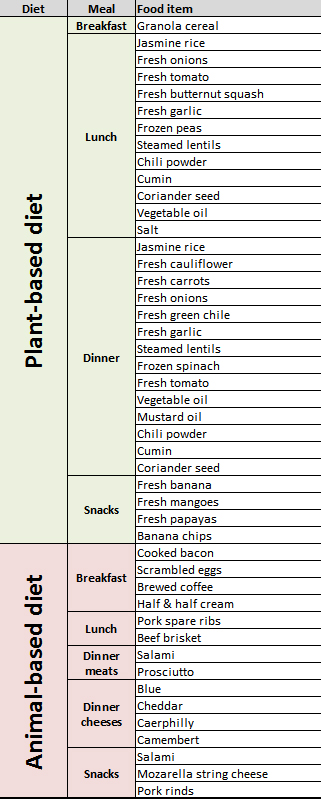
Researchers had 11 volunteers (6 male), ages 21 to 33, consume both a plant-based diet (grains, legumes, fruits, vegetables. dietary fat: 22.1% of calories, dietary protein: 10.0%, fiber: 25.6 grams per 1000 calories) and an animal-based diet (meats, eggs, cheeses. dietary fat: 69.5%, dietary protein: 30.1%, fiber: “nearly zero”) for 5 days.

Here’s Table 5 from the study:

AnimalAndPlantDiets

They found:

“The animal-based diet increased the abundance of bile-tolerant microorganisms (Alistipes, Bilophila and Bacteroides) and decreased the levels of Firmicutes that metabolize dietary plant polysaccharides (Roseburia, Eubacterium rectale and Ruminococcus bromii).”

It increased bile-tolerant organisms because more bile is excreted when more fat is eaten. Bile-tolerant organisms cause discomfort because they produce more hydrosulfuric acid.

“Increases in the abundance and activity of Bilophila wadsworthia on the animal-based diet support a link between dietary fat, bile acids and the outgrowth of microorganisms capable of triggering inflammatory bowel disease.”

A bit more data from the study:

  • GI motility was significantly lower on the animal-based diet (median transit time of 1.5 days) than on the plant-based diet (1.0 days).
  • DCA, a secondary bile acid known to promote DNA damage and hepatic carcinomas [liver cancer] accumulates significantly on the animal-based diet.
  • Total fecal bile acid concentrations increase significantly on the animal-based diet.
  • Bile acids have been shown to cause inflammatory bowel disease in mice by stimulating the growth of the bacterium Bilophila which is known to reduce sulfite to hydrogen sulphide. [Dissolved in water, hydrogen sulfide is known as hydrosulfuric acid.]

And this…

Growth of B. wadsworthia is stimulated in mice by select bile acids secreted while consuming saturated fats from milk. Our study provides several lines of evidence confirming that B. wadsworthia growth in humans can also be promoted by a high-fat diet. First, we observed B. wadsworthia to be a major component of the bacterial cluster that increased most while on the animal-based diet. This Bilophila-containing cluster also showed significant positive correlations with both long-term dairy and baseline saturated fat intake, supporting the proposed link to milk-associated saturated fats. Second, the animal-based diet led to significantly increased faecal bile acid concentrations. Third, we observed significant increases in the abundance of microbial DNA and RNA encoding sulphite reductases on the animal-based diet. Together, these findings are consistent with the hypothesis that diet-induced changes to the gut microbiota may contribute to the development of inflammatory bowel disease.

I often mention to people who experience GI discomfort that more fat in their meal will cause more bile acids to be released (bile emulsifies fat and aids in its digestion).  And bile, or bile metabolites, irritate the lining of the colon (and have been implicated in colon cancer).  Maybe I lose them at the word bile.

A meal of beans and other fermentable carbohydrates (broccoli, cabbage, onions, garlic, etc.), when consumed with a lot of fat, especially saturated fat of which dairy foods are a good source, can cause more distress than the same meal eaten with less fat.

Dairy Food Prevents Fractures? It’s A Ruse.

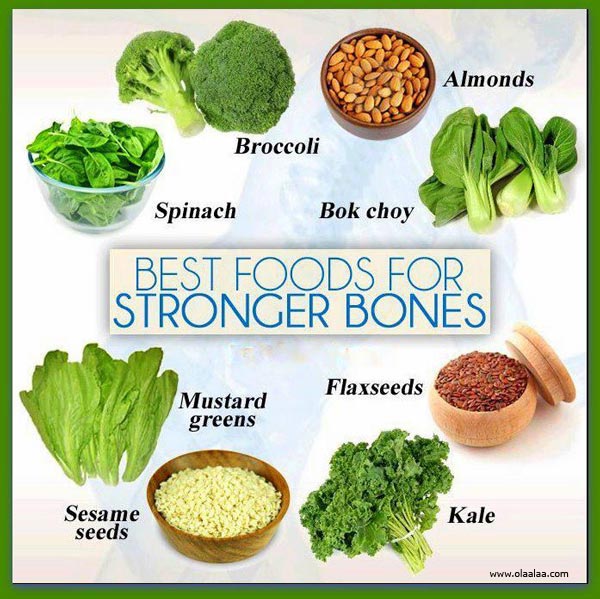
GreensForBonesHere’s an 18-year prospective study of 72,337 postmenopausal women:

Calcium, Vitamin D, Milk Consumption, And Hip Fractures: A Prospective Study Among Postmenopausal Women, American Journal of Clinical Nutrition, 2003

It found:

  • “Total calcium intake was not associated with hip fracture risk.”
  • Milk consumption was not associated with a lower risk of hip fracture.”

And a more recent one that found no significant association between most dairy foods and hip fracture:

Milk and yogurt consumption are linked with higher bone mineral density but not with hip fracture: the Framingham Offspring Study, Archives of Osteoporosis, February 2013

Writing in JAMA Pediatrics last year (Three Daily Servings of Reduced-Fat Milk, An Evidence-Based Recommendation?), Harvard professor and pediatrician David Ludwig said:

“Humans have no nutritional requirement for animal milk, an evolutionary recent addition to diet. Anatomically modern humans presumably achieved adequate nutrition for millennia before domestication of dairy animals, and many populations throughout the world today consume little or no milk for biological reasons (lactase deficiency), lack of availability, or cultural preferences.

Adequate dietary calcium for bone health, often cited as the primary rationale for high intake of milk, can be obtained from many other sources. Indeed, the recommended levels of calcium intake in the United States, based predominately on balance studies of 3 weeks or less, likely overestimate actual requirements and greatly exceed recommended intakes in the United Kingdom.

Throughout the world, bone fracture rates tend to be lower in countries that do not consume milk compared with those that do. Moreover, milk consumption does not protect against fracture in adults, according to a recent meta-analysis.”

In Milk Does A Body Good? Maybe Not Always, Harvard Doc Argues, Ludwig says people who eat a diet of leafy greens, legumes, nuts and seeds, get little to no added nutritional benefit from consuming dairy food, and:

“The point is, we can get plenty of calcium from a whole range of foods. … On a gram for gram basis, cooked kale has more calcium than milk.”

Comedians In Cars Getting Coffee

Jerry Seinfeld’s new (since 2012 but new to me) show Comedians In Cars Getting Coffee had me at the word coffee.

Each episode has Seinfeld describing and driving a vintage car, picking up a comedian, and taking them out for coffee. In the latest, Jerry picks up Jay Leno and they go out for Leno’s first ever cup of coffee:

Jerry and Larry David (1952 Beetle) have such good chemistry. At one point they’re talking about David’s food Fanaticism and Jerry gets him to eat a pancake, with syrup. David: “I can’t believe this is how people live.” (Starts about 9:28.)

Larry David Eats A Pancake

Getting Your Protein From Plants, Instead of Animals, May Protect Bone

EatBeans2High protein diets increase the risk for bone fracture. That doesn’t mean protein isn’t important.  Too little protein also increases the risk for fracture.  I’ve seen some vegetarian diets that left their consumers dangerously low in protein. I mean, if all you’re going to eat is bananas…

How do you protect your bones if you’re cutting back on animal foods? Get your protein from plants:

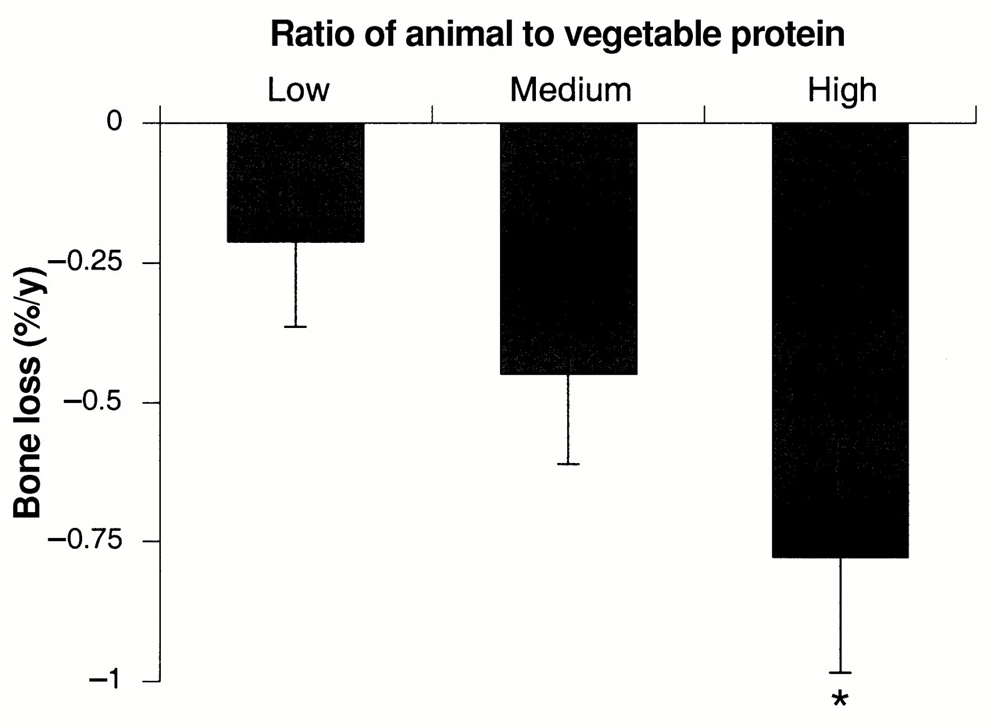
A High Ratio Of Dietary Animal To Vegetable Protein Increases The Rate Of Bone Loss And The Risk Of Fracture In Postmenopausal Women, American Journal of Clinical Nutrition, 2001

“Elderly women with a high dietary ratio of animal to vegetable protein intake have more rapid femoral neck bone loss and a greater risk of hip fracture than do those with a low ratio. … These associations were unaffected by adjustment for age, weight, estrogen use, tobacco use, exercise, total calcium intake, and total protein intake. … This suggests that an increase in vegetable protein intake and a decrease in animal protein intake may decrease bone loss and the risk of hip fracture.”

BoneLossFemoral2

HipFracture2

What’s the mechanism?

“Different sources of dietary protein may have different effects on bone metabolism. Animal foods provide predominantly acid precursors, whereas protein in vegetable foods is accompanied by base precursors not found in animal foods. Imbalance between dietary acid and base precursors leads to a chronic net dietary acid load that may have adverse consequences on bone.”

It isn’t just bone that weakens when exposed to a high animal protein diet, it’s muscle too:

“… skeletal muscle, like bone, may serve as a reservoir of base that is gradually depleted to maintain acid-base balance. … Muscle mass decreases during experimentally induced metabolic acidosis. … Chronic depletion of skeletal muscle could lead to weakness and a greater number of falls, both factors in hip fracture.”

Note that those who had the highest ratio, who ate the most animal food, also had the highest calcium intake (1124 mg/day vs. 662 mg/day). Those eating a high animal food diet took in over 2/3rds more calcium and still had more bone loss and fractures.

What plant foods are good sources of protein? See my logo.

If Milk Builds Strong Bones, Why Do People In Countries Who Consume The Most Have Higher Fracture Rates?

Here’s a map of hip fracture rates for men and women. Legend: Red (annual incidence >250/100,000), orange (150–250/100,000), green (<150/100,000).

From: A Systematic Review Of Hip Fracture Incidence And Probability Of Fracture Worldwide, Osteoporosis International, September 2012

HipFractureRatesWorldwide2

Here’s the map of global milk consumption I just posted:

MilkConsumptionGlobal

Source: ChartsBin

If milk builds strong bones, why do people in countries who consume the most have higher fracture rates?