Category Archives: Plant-Based Diets

Compounds In Green Tomatoes And Apple Peels Stimulate Muscle Growth, Protect Against Muscle Wasting (Sarcopenia)

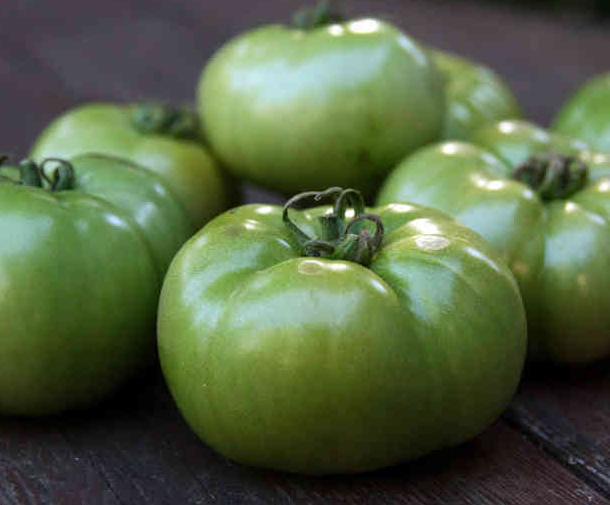
GreenTomatoes3This is the most exciting thing I’ve read all day. Compounds in apple peels and green tomatoes could help preserve muscle as we age, staving off sarcopenia. The compounds are so effective that isolated, concentrated forms were shown to stimulate muscle growth in mice and human muscle cells.

Here’s the recent study. The compound in this one is tomatidine, found in green tomatoes:

Systems-Based Discovery of Tomatidine as a Natural Small Molecule Inhibitor of Skeletal Muscle Atrophy, The Journal of Biological Chemistry, 9 April 2014

Here’s the researchers’ prior study. The compound is ursolic acid, found in apple peels:

mRNA Expression Signatures of Human Skeletal Muscle Atrophy Identify a Natural Compound that Increases Muscle Mass, Cell Metabolism, June 2011

Of note, red tomatoes contain little tomatidine:

“In humans, dietary tomatidine comes from ingestion of alpha-tomatine, which is abundant in green tomatoes but typically decreases by approximately 99% as tomatoes ripen. … It is also interesting that alpha-tomatine is higher in organically grown tomatoes compared to conventionally grown tomatoes.”

Not only do these compounds reduce muscle atrophy and stimulate muscle growth, but they also reduce body fat (adiposity):

“Like other interventions that stimulate skeletal muscle hypertrophy, tomatidine also decreases fat. The mechanism by which tomatidine decreases fat is not yet known.”

And…

“Importantly, ursolic acid’s effects on muscle were accompanied by reductions in adiposity, fasting blood glucose, and plasma cholesterol and triglycerides.”

AppleSarcopenia3The apple peel compound may also inhibit cancer growth:
Ursolic Acid Inhibits Proliferation and Induces Apoptosis of Cancer Cells In Vitro and In Vivo, Journal of Biomedicine and Biotechnology, 2011

Here’s a graphic that accompanied the ursolic acid (apple peel) study. The red and green parts show how researchers identified ursolic acid. Pretty creative! The purple part, the telling part, shows that giving mice ursolic acid promoted muscle growth:
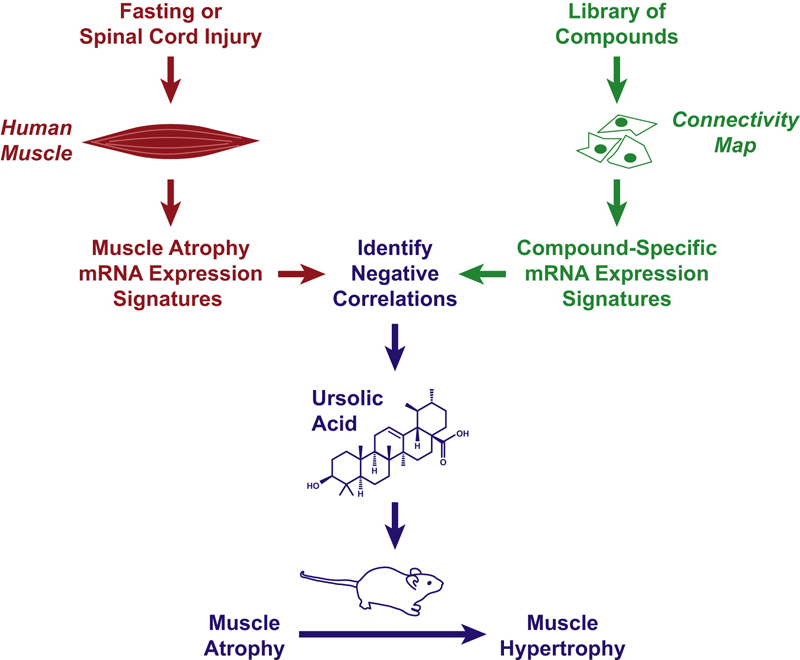
Graphical Abstract

Wikipedia names these food sources for ursolic acid:

“Including apples, basil, bilberries, cranberries, elder flower, peppermint, rosemary, lavender, oregano, thyme, hawthorn, and prunes. Apple peels contain large quantities of ursolic acid and related compounds.”

Here’s a press release from University of Iowa on the tomatidine study and a few excerpts:
Green Is Good; Natural Compound From Green Tomatoes Increases Muscle, Protects Against Muscle Wasting, 9 April 2014

“As unlikely as it sounds, green tomatoes may hold the answer to bigger, stronger muscles.

Using a screening method that previously identified a compound in apple peel as a muscle-boosting agent, a team of University of Iowa scientists has now discovered that tomatidine, a compound from green tomatoes, is even more potent for building muscle and protecting against muscle atrophy.

In a new study, published online April 9 in the Journal of Biological Chemistry, Christopher Adams, associate professor of internal medicine and molecular physiology and biophysics in the UI Carver College of Medicine, searched for a small molecule compound that might be used to treat muscle atrophy. He zeroed in on tomatidine using a systems biology tool called the Connectivity Map, which was developed at the Broad Institute of MIT and Harvard University. Adams discovered that tomatidine generates changes in gene expression that are essentially opposite to the changes that occur in muscle cells when people are affected by muscle atrophy.

After identifying tomatidine, Adams and his team tested its effects on skeletal muscle. They first discovered that tomatidine stimulates growth of cultured muscle cells from humans.

“That result was important because we are looking for something that can help people,” Adams says.

Their next step was to add tomatidine to the diet of mice. They found that healthy mice supplemented with tomatidine grew bigger muscles, became stronger and could exercise longer. And, most importantly, they found that tomatidine prevented and treated muscle atrophy.

Interestingly, although mice fed tomatidine had larger muscles, their overall body weight did not change due to a corresponding loss of fat, suggesting that the compound may also have potential for treating obesity.

An attractive aspect of tomatidine is that it is a natural compound derived from tomatoes. It is produced when alpha-tomatine, which is found in tomato plants and in green tomatoes in particular, is digested in the gut.

Adams and his team previously used this same research strategy to discover that ursolic acid, a compound from apple peels, promotes muscle growth.”

They didn’t find that just eating green tomatoes and apple peels (compared to eating a concentrated supplement) would prevent muscle wasting, but they didn’t negate it either. Unfortunately, it’s the isolated, concentrated compound that has value for businesses, not the food. And a compound that can do all this would be ripe for the capitalist’s picking. Sure enough:

“We are now very interested in the possibility that several food-based natural compounds such as tomatidine and ursolic acid might someday be combined into science-based supplements, or even simply incorporated into everyday foods to make them healthier.”

To that end, Adams and his colleagues have founded a biotech company called Emmyon, “to accelerate this research and translate it to people.”

New Study: Daily Serving Of Beans, Peas, Chickpeas Or Lentils Significantly Reduces LDL Cholesterol

EatBeans2

Eat beans.

This was a meta-analysis of 26 randomized controlled trials (RCTs). RCTs are the gold standard of scientific investigation. It studied the effect of dietary pulses (beans, chickpeas, lentils, peas) on serum lipids.

Effect of dietary pulse intake on established therapeutic lipid targets for cardiovascular risk reduction: a systematic review and meta-analysis of randomized controlled trials, Canadian Medical Association Journal, 7 April 2014

It found “a significant reduction in LDL cholesterol” from “a median dose of 130 g/d of pulses (about 1 serving daily) over a median follow-up of 6 weeks.”

“Our findings suggest that dietary pulse intake significantly reduces LDL cholesterol levels.”

Of note:

“A previous meta-analysis of 19 trials involving more than 18,000 participants showed that trials of statins and those of non-statins including dietary interventions had a similar 1-to-1 association between LDL cholesterol and cardiovascular mortality. That is, a 1% reduction in LDL cholesterol translated to a 1% reduction in cardiovascular mortality. Therefore, the reduction of 5% observed in our meta-analysis suggests a potential risk reduction of 5%–6% in major vascular events.”

Excess Carbohydrate Does Not Turn To Body Fat

RiceAndBeans3

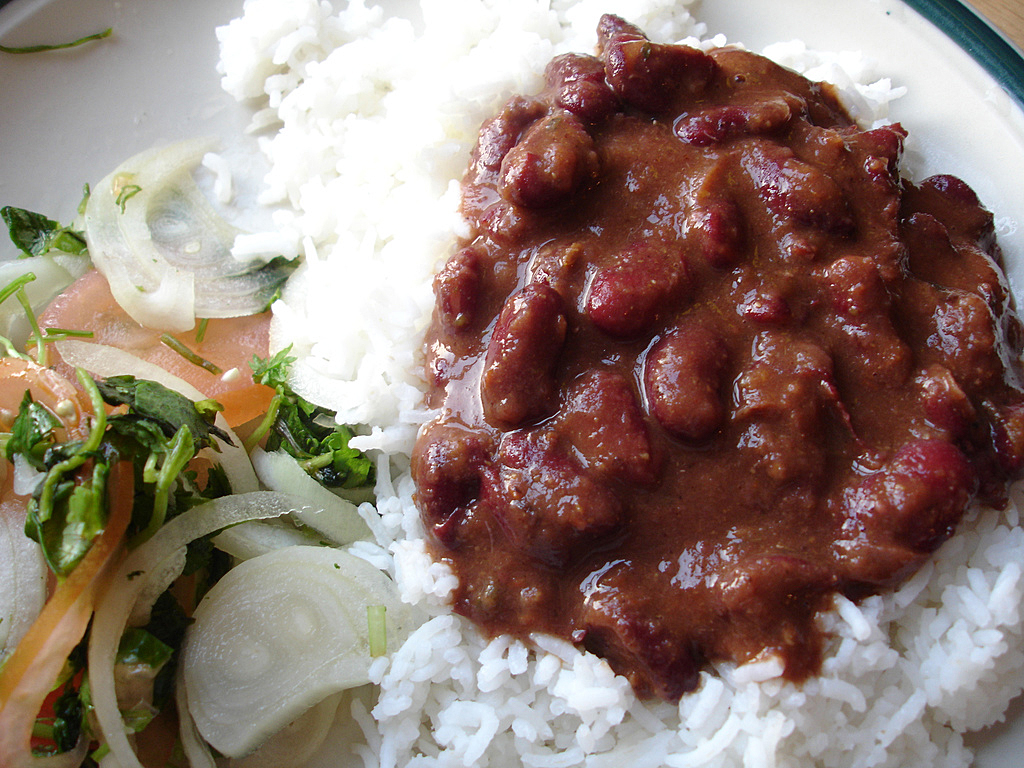
Rice and beans, a staple food of many cultures around the world.

Dr. McDougall, in his March 2009 newsletter, discusses “de novo lipogenesis,” a term that describes the pathway for converting dietary carbohydrate into body fat. He says the pathway is not utilized much in humans, that “excess starch does not turn to body fat.” He provides several references to support his claim. They do indeed back the notion that excess carbohydrate or replacement of dietary fat by carbohydrate does not induce de novo lipogenesis to any substantial degree.

McDougall:

“A widely held belief is that the sugars in starches are readily converted into fat and then stored unattractively in the abdomen, hips, and buttock. Incorrect! And there is no disagreement about the truth among scientists or their published scientific research.5-13 After eating, the complex carbohydrates found in starches, such as rice, are digested into simple sugars in the intestine and then absorbed into the bloodstream where they are transported to trillions of cells in the body in order to provide for energy. Carbohydrates (sugars) consumed in excess of the body’s daily needs can be stored (invisibly) as glycogen in the muscles and liver. The total storage capacity for glycogen is about two pounds. Carbohydrates consumed in excess of our need and beyond our limited storage capacity are not readily stored as body fat. Instead, these excess carbohydrate calories are burned off as heat (a process known as facultative dietary thermogenesis) or used in physical movements not associated with exercise.9,13

The process of turning sugars into fats is known as de novo lipogenesis. Some animals, such as pigs and cows, can efficiently convert the low-energy, inexpensive carbohydrates found in grains and grasses into calorie-dense fats.5 This metabolic efficiency makes pigs and cows ideal “food animals.” Bees also perform de novo lipogenesis; converting honey (simple carbohydrates) into wax (fats). However, human beings are very inefficient at this process and as a result de novo lipogenesis does not occur under usual living conditions in people.5-13 When, during extreme conditions, de novo lipogenesis does occur the metabolic cost is about 30% of the calories consumed—a very wasteful process.11

Under experimental laboratory conditions overfeeding of large amounts of simple sugars to subjects will result in a little bit of de novo lipogenesis. For example, trim and obese women were overfed 50% more total calories than they usually ate in a day, along with an extra 3.5 ounces (135 grams) of refined sugar. From this overfeeding the women produced less than 4 grams (36 calories) of fat daily, which means a person would have to be overfed by this amount of extra calories and sugar every day for nearly 4 months in order to gain one extra pound of body fat.10 Obviously, even overeating substantial quantities of refined and processed carbohydrates is a relatively unimportant source of body fat. So where does all that belly fat come from? The fat you eat is the fat you wear.”

That study where women were overfed by 50% is something else. That’s like having them eat 3000 calories/day instead of 2000, in sugar no less. And they put on hardly any body fat. That reminds me of the Cubans during their Special Period, where they lost weight and lowered their rates of diabetes, heart disease, and cancer, by eating a diet of primarily rice and sugar.

Americans (and other rich populations) defeat this by eating a lot of fat. When you add fat to the mix, it’s a whole different ball game. See my posts:
“Meat And Potatoes” Dietary Pattern And Risk For Colon Cancer
High-Fat High-Sugar Dietary Pattern (“Meat & Potatoes”) Linked To Colon Cancer, Diabetes

I ran across McDougall’s discussion of de novo lipogenesis because he took issue with the following statement from that new saturated fat study I keep talking about:

“For example, the influence of metabolism seems particularly relevant for the de novo synthesis of even-numbered saturated fatty acids in the body, compositions of which are largely determined by dietary factors, including carbohydrate and alcohol consumption (33–35), and other metabolic pathways (36, 37) rather than direct dietary intake.”

If carbohydrate intake doesn’t induce de novo lipogenesis to any substantial degree, why would these authors (whose study gave saturated fat consumption the green light) say it does?

Related: New Study: Low-Protein, High-Carb Diet Offers Similar Benefits To Caloric Restriction – Without Caloric Restriction

Low-Protein, High Carbohydrate Diet Linked To Longer Life

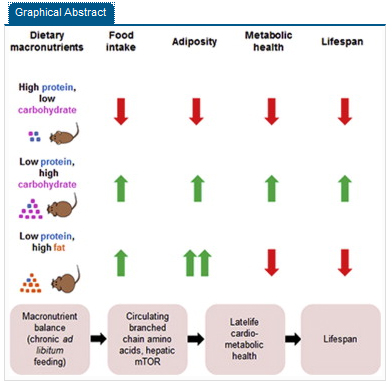
MiceMacronutrients2014StudyI’m bringing this post from March 5 up to the top because I wanted to add the figure to the right. It was part of the study, used to illustrate the effect of varying macronutrients.

While the low-carb, high-protein diets reduced food intake and body fat, they did so at the expense of lifespan and quality of life. Low-carb eating mice lived shorter lives and had worse health later in life.

The worst diet? High-fat, low-protein. The mice were fatter than the other groups, had poor health, and died early.
________

EatPlants

Eat Plants.

The Ratio of Macronutrients, Not Caloric Intake, Dictates Cardiometabolic Health, Aging, and Longevity in Ad Libitum-Fed Mice, Cell Metabolism, March 2014

The fundamental questions of what represents a macronutritionally balanced diet and how this maintains health and longevity remain unanswered. Here, the Geometric Framework, a state-space nutritional modeling method, was used to measure interactive effects of dietary energy, protein, fat, and carbohydrate on food intake, cardiometabolic phenotype, and longevity in mice fed one of 25 diets ad libitum. Food intake was regulated primarily by protein and carbohydrate content. Longevity and health were optimized when protein was replaced with carbohydrate to limit compensatory feeding for protein and suppress protein intake. These consequences are associated with hepatic mammalian target of rapamycin (mTOR) activation and mitochondrial function and, in turn, related to circulating branched-chain amino acids and glucose. Calorie restriction achieved by high-protein diets or dietary dilution had no beneficial effects on lifespan. The results suggest that longevity can be extended in ad libitum-fed animals by manipulating the ratio of macronutrients to inhibit mTOR activation.

And…

“Our results show that healthy aging is not achieved in mice fed high-protein diets and/or diluted diets to reduce calorie intake, but rather by low-protein diets (especially, we might predict, those low in BCAAs*), where additional energy requirements are met by dietary carbohydrates rather than fats.”

*BCAAs are Branched Chain Amino Acids (leucine, isoleucine and valine). Meat, dairy and other animal foods are good sources of BCAAs.

So, high-protein diets activate mTOR. mTOR is a protein “that regulates cell growth, cell proliferation, cell motility, cell survival.” A high level of mTOR signaling has been linked to cancer and Alzheimer’s Disease.

“Given the evidence that activation of mTOR is proaging, our results support this as a mechanism to explain the life-extending effects of a low-protein, high-carbohydrate diet.”

By the way, insulin also activates mTOR. People in the early stages of diabetes often have high levels of insulin – their pancreas is attempting to compensate for increasing insulin resistance brought about, in part, by eating too much fat, especially saturated fat. So…

Insulin resistance –> High insulin levels –> Activation of MTOR –> Cancer?

Having worked in the field of diabetes for years I know that “people with diabetes are at significantly higher risk for many forms of cancer.”

Diets High In Animal Protein, But Not Plant Protein, Linked To Cancer, Diabetes, And Earlier Death

EatBeans2

Want protein? Eat beans.

I just posted about mice that lived longer and healthier lives when they ate low-protein, high carbohydrate diets.  Because people will say “Great for the mice!” here’s a brand new study in humans that found the same thing:

Low Protein Intake Is Associated with a Major Reduction in IGF-1, Cancer, and Overall Mortality in the 65 and Younger but Not Older Population, Cell Metabolism, March 2014

Mice and humans with growth hormone receptor/IGF-1 deficiencies display major reductions in age-related diseases. Because protein restriction reduces GHR-IGF-1 activity, we examined links between protein intake and mortality. Respondents aged 50–65 reporting high protein intake had a 75% increase in overall mortality and a 4-fold increase in cancer death risk during the following 18 years.

These associations were either abolished or attenuated if the proteins were plant derived.

There was also a “5-fold increase in diabetes mortality across all ages.”

This was an epidemiological study that tracked 6,381 US men and women, 50 and over (NHANES III), for nearly 2 decades. It included a variety of ethnicities, education levels, and health conditions.

A few more excerpts from the study:

  • Notably, our results showed that the amount of proteins derived from animal sources [meat, fish, cheese, milk, eggs] accounted for a significant proportion of the association between overall protein intake and all-cause and cancer mortality. These results are in agreement with recent findings on the association between red meat consumption and death from all-cause and cancer.
  • Previous studies in the U.S. have found that a low carbohydrate diet is associated with an increase in overall mortality and showed that when such a diet is from animal-based products, the risk of overall as well as cancer mortality is increased even further.
  • The progression of both melanoma and breast cancer was strongly attenuated by the low protein diet, indicating that low protein diets may have applications in both cancer prevention and treatment.
  • In mice, the changes caused by reduced protein levels had an effect potent enough to prevent the establishment of 10%–30% of tumors, even when 20,000 tumor cells were already present at a subcutaneous site.

So, you can have cancer, but prevent it’s progression by eating a low-protein diet.  Dr. Campbell, author of The China Study, must be breaking out the champagne.

Note, though, that when someone reached their mid-60s, a higher protein diet was found to be beneficial:

“Both high and moderate protein intake in the elderly were associated with reduced mortality compared to that in the low protein group, suggesting that protein intake representing at least 10% of the calories consumed may be necessary after age 65 to reduce age-dependent weight loss and prevent an excessive loss of IGF-1 and of other important factors.”

For these authors, less than 10% was considered low-protein, 10-19% moderate protein, over 20% high-protein.  They found that even moderate amounts of protein had detrimental effects during middle age.  However, they are advising people over 65 to get at least 10% of their calories from protein.  Note, however, that risk for diabetes was still 5-fold at those older ages.  So the protein they should be consuming should come from plant sources. Bean, legumes, peas, peanuts, soy products, nuts, and seeds are excellent sources of plant protein.

“These results suggest that low protein intake during middle age followed by moderate to high protein consumption in old adults may optimize healthspan and longevity.”

Here’s co-author of the study, Valter Longo (Professor of Biogerontology at USC Davis School of Gerontology, Director of USC Longevity Institute), from their press release:

“The majority of Americans are eating about twice as much proteins as they should, and it seems that the best change would be to lower the daily intake of all proteins but especially animal-derived proteins,” Longo said. “But don’t get extreme in cutting out protein; you can go from protected to malnourished very quickly.”

“Almost everyone is going to have a cancer cell or pre-cancer cell in them at some point. The question is: does it progress?” Longo asked. “Turns out one of the major factors in determining if it does is protein intake.”


Want To Avoid Diabetes? Eat Plants

Because plants contain flavonoids, and flavonoids are consistently linked to a lower risk of type 2 diabetes in studies. Here’s the latest:

Dietary Intakes of Individual Flavanols and Flavonols Are Inversely Associated with Incident Type 2 Diabetes in European Populations, The Journal of Nutrition, March 2014

“In this large prospective study across 8 European countries, all flavan-3-ol monomers, proanthocyanidins with lower degree of polymerization, and the flavonol myricetin were inversely related to a lower risk of [type 2 diabetes].”

This study says:

“Flavonoids are a large group of secondary metabolites in plants that comprise 6 subclasses: flavanols or flavan-3-ols (flavan-3-ol monomers, proanthocyanidins, and theaflavins), anthocyanidins, flavonols, flavanones, flavones, and isoflavones.”

So the word “flavonoid” is a bucket term; the study found some flavonoids were more protective than others. But all flavonoids are found exclusively in plants. The main food sources of one particularly beneficial flavanol were “tea and some fruit, particularly apples and pears.”

FlavonoidsTypes2

Here’s a study from a few months ago, similar group of investigators:

The Association Between Dietary Flavonoid and Lignan Intakes and Incident Type 2 Diabetes in European Populations, The EPIC-InterAct study, Diabetes Care, December 2013

“CONCLUSIONS Prospective findings in this large European cohort demonstrate inverse associations between flavonoids, particularly flavanols and flavonols, and incident type 2 diabetes. This suggests a potential protective role of eating a diet rich in flavonoids, a dietary pattern based on plant-based foods, in the prevention of type 2 diabetes.”

How do flavonoids protect against diabetes? From the first study:

“Several in vitro and in vivo studies have evaluated the antidiabetic effects of individual flavan-3-ol monomers and flavan-3-ol–rich foods (e.g., cocoa and tea), showing a high range of activities related to improving glucose homeostasis, such as inhibition of glucosidase activity and glucose absorption from the intestine, protection of pancreatic β cells, increased insulin secretion, activation of insulin receptors and glucose uptake in the insulin-sensitive tissues, and modulation of intracellular signaling pathways and genes involved in gluconeogenesis and glycogenesis.”

People underestimate the benefit of a plant-strong diet. They also underestimate the detriment of a meat-and-dairy-rich diet. I’ve had many people ask me, “What I eat doesn’t have anything to do with whether I get diabetes. Does it?” It does.

Vegetarian Diets Linked To Lower Blood Pressure

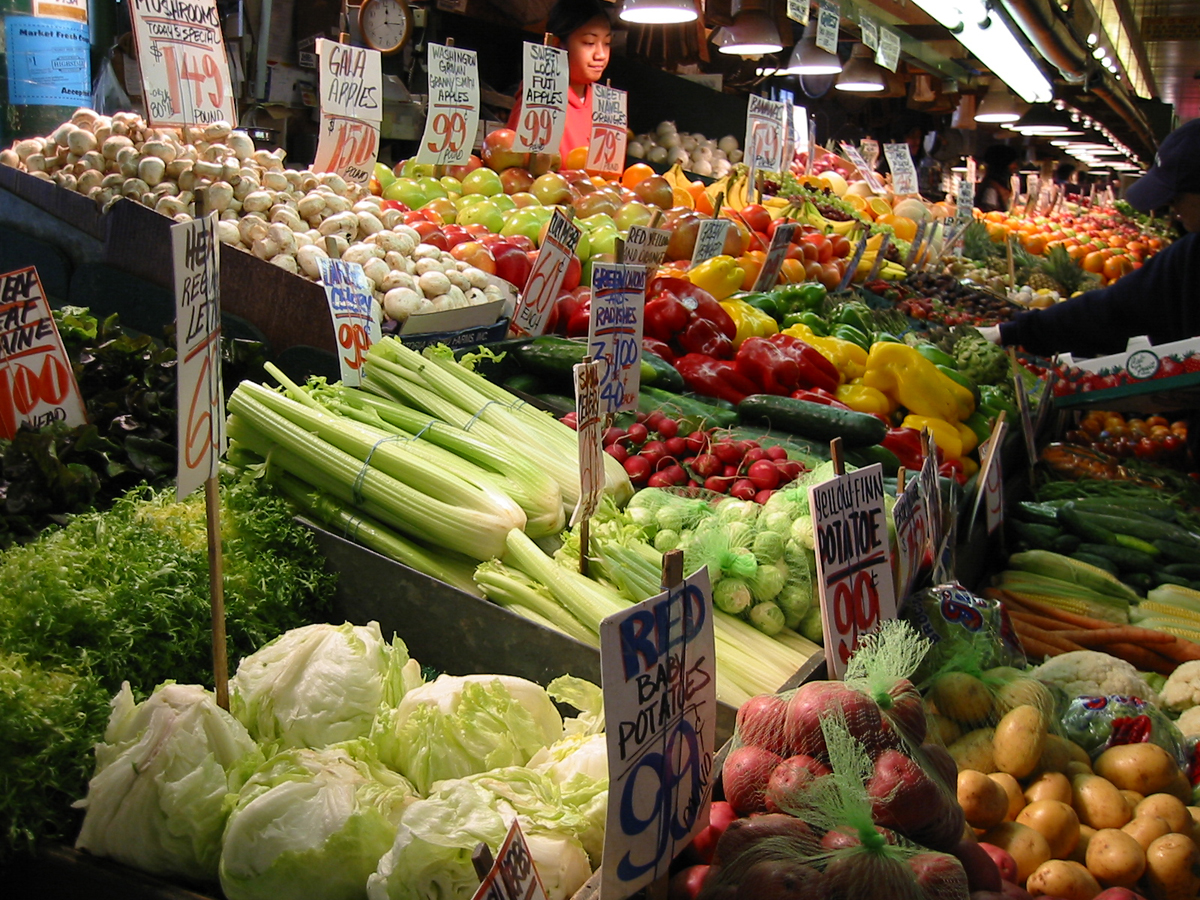
Inside Pike Place MarketHere’s the study. It was just posted on a Journal of the American Medical Association (JAMA):

Vegetarian Diets And Blood Pressure, JAMA Internal Medicine, 24 February 2014

This was a meta-analysis, an analysis of several previously-conducted studies. In this case there were 39, consisting of 7 clinical trials and 32 observational studies, including about 22,000 people. Both types of studies found lower blood pressure (BP) in people not eating meat.

Conclusions: Consumption of vegetarian diets is associated with lower BP. Such diets could be a useful nonpharmacologic means for reducing BP.

Here’s the lead author, Dr. Yoko Yokoyama, speaking:

Our analysis found that vegetarian diets lower blood pressure very effectively, and the evidence for this is now quite conclusive.”

A bit more from Yokoyama, from Reuters:
Vegetarian Diets May Lower Blood Pressure, Reuters, 24 February 2014

“Unlike drugs, there is no cost to a diet adjustment of this type, and all the ‘side effects’ of a plant-based diet are desirable: weight loss, lower cholesterol, and better blood sugar control.”

“Plant-based foods are often low in sodium and are rich in potassium, and potassium lowers blood pressure.”

The same foods are also very low in saturated fat – the type of fat in meat and cheese – and eating less saturated fat means blood can circulate more easily, she explained.

And this:

“I would encourage physicians to prescribe plant-based diets as a matter of routine, and to rely on medications only when diet changes do not do the job,” Yokoyama said.

That reminds me of Kaiser Permanente’s recent endorsement of plant-based diets:

Kaiser Permanente, with 9 million members and $48 billion in operating revenues, is the nation’s largest managed care organization. It recently came out in support of plant-based diets:

Nutritional Update for Physicians: Plant-Based Diets (pdf), The Permanente Journal, Spring 2013

Permanente’s Special Report seeks to train physicians and elevate the topic of plant-based nutrition to mainstream. It does so with a case study and a literature review. They conclude that whole food plant-based diets should be “a first-line treatment for chronic illnesses.”

Kaiser actually said the following.  Can you believe it?

“Too often, physicians ignore the potential benefits of good nutrition and quickly prescribe medications instead of giving patients a chance to correct their disease through healthy eating and active living. If we are to slow down the obesity epidemic and reduce the complications of chronic disease, we must consider changing our culture’s mind-set from “live to eat” to “eat to live.” The future of health care will involve an evolution toward a paradigm where the prevention and treatment of disease is centered, not on a pill or surgical procedure, but on another serving of fruits and vegetables.”

What Happens When You Drop The Moderation Mantra?

EatingInModerationRuse2Rip Esselstyn, in his book My Beef With Meat, shared this email he received from a man who met resistance when he decided to change his diet:

“My wife’s and my results have inspired a few folks to give the E2 diet a try, and I’ve had to warn them that they are going to be surprised how many scientist friends they have that they didn’t know about.

It’s amazing, really, I never heard a word of concern when somebody saw me eat my fifth piece of pizza after polishing off a plate of wings and a few beers. However, one word that I’m holding off on the meat and lowering my fat intake, and they come out of the woodwork.

They all seem to have kept their non-science office jobs, but suddenly they’re evolutionary biologists talking about the shape of my teeth proving our omnivorous lineage, dietitians concerned about the exact percentage of my calories coming from protein, and biochemists who suddenly are worried about the details of my blood chemistry.

My advice? Smile, thank them for their advice, and ignore them like they ignored you when you were eating crap that was killing you.”

Does that sound familiar to you?  People coming out of the woodwork, wearing their evolutionary biologist hats and their biochemist hats to say you’re wrong?  Wrong for eating vegetables and fruits and beans and rice?  Saying you should eat chicken, and beef, and fish, and eggs, and cheese, and yogurt … in moderation, of course.   Sounds familiar to me.