Category Archives: Cancer

Many Of Us Have Cancer Inside Us Right Now. The Trick Is To Slow Its Growth So We “Unknowingly Live With It, Rather Than Die From It.”

Transcript:

Many of us have tumors growing inside us right now. While most people develop cancer, slowing its growth can help us unknowingly live with it, rather than die from it. Watch the video to learn more.

One cancer cell never hurt anyone; two cancer cells never hurt anyone; but a billion cancer cells, that’s when we start getting into trouble. So, we have to slow—even reverse—the division and growth of cancer cells. We all have cells that could grow into tumors, but if we slow them down, our immune systems may have a chance to clean them up before they hurt us.

Take breast cancer, for example, the most common internal cancer among American women. Like all cancers, it starts with a single cell. This is a photomicrograph (a photograph taken under a microscope) of an actual breast cancer cell, which then divides and becomes two cells, then four, then eight, and so on. Every time the cells divide, the tiny tumor doubles in size. It only needs to double about 30 times, and we’re up to a billion cancer cells—which is a tumor just large enough to be felt and picked up by mammography.

Even though a tumor only has to double 30 times, it may take anywhere from about 50 days to a thousand days for a cancer cell to double just once. So, that means from the time that first cell mutates, it takes between a few years and nearly a century before it grows to show up as a little tumor we can see.

The shortest known interval between exposure to a carcinogen and the development of cancer is about 18 months, which is when some of the first leukemia cases started appearing after Hiroshima. Cancers need time to grow, and for most solid tumors, meaning non-blood tumors, cancer takes decades to develop. Check it out: the ovarian cancer you get diagnosed with at the average age of 62 started growing 44 years earlier. So, you’ve had cancer since you were 18 years old—you just didn’t know it. Some breast cancers may even start in the womb before we’re even born, and may depend in part on what your mom ate.

The process of cancer development happens in stages. The first stage is cancer initiation, the irreversible DNA mutation that turns that first cell bad. But then we move to the promotion stage of cancer, which is reversible. If we don’t promote the tumor growth, it can stay hidden forever, or even disappear. When I was a teen I ate a lot of processed meat—bacon, hot dogs—known human carcinogens, meaning they cause cancer. I very well may have mutated one of the cells in my colon. It can take 50 years for colon cancer to show up after it’s been initiated. Cancer may have been initiated by a DNA mutation, but if we don’t promote it, if we keep it dormant, if we slow it down, we may be able to even reverse its growth. I mean, I don’t care if the cancer shows up a hundred years from now; I don’t imagine I’ll be around to worry about it.

Take prostate cancer. More men die with prostate cancer than because of it. According to autopsy studies in Japan, there is about as much hidden prostate cancer there as we have in the United States. But their risk of dying from prostate cancer was 40 times lower, until they started Westernizing their diets and started eating more like us, with more animal foods and fewer plants.

Japan has among the longest life expectancies, but when Japanese men finally do die, many have tiny prostate tumors. But they die with their cancer, instead of from their cancer. By their 60s, the majority of men—nearly two-thirds—have tiny prostate cancer tumors whether they know it or not, and nearly one in three men in their thirties is already brewing cancer in their prostates. Similarly, if you look at forensic autopsies of middle-aged women, more than a third were already harboring cancer in their breast when they were only in their 40s. Yet the risk of dying from breast cancer at that age is less than one percent. In fact, your cumulative risk of ever dying from breast cancer in your lifetime is less than four percent. So, most breast cancers, just like most prostate cancers, grow so slowly that you can live your whole life not even knowing you have them.

It’s like atherosclerosis. About half of young Americans already have atherosclerotic plaques—hardening of their coronary arteries—by their twenties. So, what we think of as diet and lifestyle prevention for both of our leading killers, heart disease and cancer, may actually be diet and lifestyle treatment.

At this very moment, many of us have tumors growing inside of us; so we can’t wait until later to start eating healthier. We have to start now. How can we slow down and even reverse cancer while it’s still microscopic? Well, for prostate and breast cancers, those tissues tend to be sensitive to growth-promoting hormones.

Scientists from UCLA placed women on a plant-based diet with exercise, and found that the levels of all measured growth hormones in their blood dropped dramatically within just two weeks. What would that do to cancer? The researchers drew the women’s blood before and after those two weeks, and dripped them onto three types of breast cancer cells growing in petri dishes. Here’s the before: cancer growth powering away at 100 percent, and here’s the after. After just two weeks of eating healthfully and walking, the blood of women on the plant-based diet reduced their cancer growth rates by 12 percent. And cancer cell death, apoptosis, shot up by 24 percent. After just two weeks of moving on a plant-based diet, the blood circulating throughout their entire bodies was that much more inhospitable to cancer. At this very moment, many of us have tumors growing inside of us, so we can’t wait until we’re older to start eating and living healthier. We have to start now—tonight.

High-Fat Diet, Especially High Saturated Fat, Increases Risk For Breast Cancer In Large Multicountry Study

Butter and knifeSeveral prominent news outlets have carried stories recently calling on us to eat more fat, especially more saturated fat, saying “fat is good for you.” Yet, in this large multicountry study, women who ate the most fat, and especially the most saturated fat, were more likely to develop breast cancer (BC) than women who ate the least:

Study: Dietary Fat Intake and Development of Specific Breast Cancer Subtypes, Journal of the National Cancer Institute, 9 April 2014

Press Release: Consuming a high-fat diet is associated with increased risk of certain types of BC, Journal of the National Cancer Institute, 9 April 2014

Researchers “prospectively analyzed data from 10,062 breast cancer (BC) patients from the EPIC study with 11.5 years of follow-up. The EPIC cohort study consisted of 337,327 women living in 10 European countries, which creates a heterogeneous cohort both in terms of geography-related dietary fat intake patterns and in terms of molecular subtype.”

The authors conclude, “a high-fat diet increases breast cancer risk and, most conspicuously, that high saturated fat intake increases risk of receptor-positive disease, suggesting saturated fat involvement in the etiology of receptor-positive breast cancer.”

News Summary: High-Fat Diet May Boost Breast Cancer Risk, Study Found Women Who Ate The Most Saturated Fat Were More Likely To Develop Tumors, HealthDay, 9 April 2014

One strength of the new study is its large numbers, said Mia Gaudet, director of genetic epidemiology at the American Cancer Society. The breast cancer subtypes linked with fat intake are common, she said. “The majority of breast cancers in the U.S. and Europe are ER-positive, PR-positive, HER2-negative,” she noted.

Lead author Sabina Sieri, PhD: It’s possible that the high-fat intake raises the levels of the body’s own estrogen, which can stimulate the growth of breast cancer cells.

Gaudet: “If you have a mainly plant-based diet, that is going to help you keep your fat intake low.”

So, dietary fat increases the risk for breast cancer. Yet Time Magazine’s Brian Walsh urges us to “Eat Butter” (7 grams of saturated fat in just 1 tablespoon) and New York Times’ Mark Bittman informs us that “Butter Is Back.” (“Butter is back, and when you’re looking for a few chunks of pork for a stew, you can resume searching for the best pieces — the ones with the most fat.”) Dietary fat has also been shown to increase the risk for prostate cancer. And we know it’s implicated in the development of insulin resistance and diabetes.  There must be some other motive working to push fat besides public health.

Study: Meat Increases Risk For Colon Cancer; Starch Decreases Risk

HamburgerI’ve written about the link between meat and colon cancer; I’ve addressed epidemiological studies and mechanisms. Here’s a recent post: Evidence That Meat Increases Risk For Colon Cancer Is “Convincing”. This is what the British Journal of Cancer said in 2011:

The associations between consumption of red and processed meat with an increased risk of colorectal cancer were considered to be ‘convincing’.

There are no dietary guidelines concerning recommended levels of consumption of red and processed meat; as for alcohol, it is assumed that ‘less is better’ and that there is no threshold below which consumption presents no risk. In this section, we assume that the optimum (or target) is zero consumption.

They said any consumption of red or processed meat increases the risk for colon cancer. I thought those were strong words coming from a respected, mainstream, professional medical journal. It pretty much disembowels the phrase “in moderation.”

Here’s a new clinical trial out of Australia, a country whose people love their meat:

Dietary Manipulation Of Oncogenic MicroRNA Expression In Human Rectal Mucosa: A Randomized Trial, Cancer Prevention Research, August 2014

These findings support increased resistant starch consumption as a means of reducing risk associated with a [high red meat] diet.

Editorial: Resistant Starch May Reduce Colon Cancer Risk From Red Meat, Journal of the National Cancer Institute, October 2014

There’s so much evidence that eating meat contributes to colon cancer that both of these papers start off with a statement of presumed fact: “A diet high in red meat increases risk of colon cancer.” They fed their subjects meat anyway, for just 4 weeks:

Their study involved 23 healthy volunteers, aged 50–75 years. Participants were randomly assigned to either a high-red-meat diet (300g raw per day of lean beef or lamb) or that same diet plus a resistant-starch supplement called StarPlus (40g per day of butyrylated high-amylose maize starch). After 4 weeks on one diet, participants switched to the other for another 4 weeks.

They ate about two-thirds of a pound of meat each day. It was a crossover design, so participants acted as their own controls. They found:

A high-red-meat diet statistically significantly increased cell proliferation in the mucosa. Adding resistant starch to the meat diet reversed [some of this increase].

How can eating starch reduce cancer risk? The mechanism, as I’ve written about before, involves short-chain fatty acids (SCFAs) produced by bacteria in the colon as they consume starch left over from our digestion.

Unlike most carbohydrates, resistant starch passes undigested to the colon. There, gut microbes ferment it, yielding short-chain fatty acids, such as butyrate, which promote colon health. Those short-chain fatty acids, the study suggests, also reduce expression of microRNAs that are associated with severe colon cancer and that increase cell proliferation.

Heme iron and heterocyclic amines from red meat cooked at high temperature alter gene expression and increase proliferation. Butyrate from microbes decreases proliferation.

Resistant starch is not fiber in the way many people think of fiber:

This paper shows it’s not the bulk fiber – like bran muffins or Metamucil – that’s important for reducing cancer risk, [it’s] types of fiber, like resistant starch, that are metabolized by colonic bacteria.

Resistant starch is in green bananas; peas, beans, lentils, and other legumes; root vegetables (including potatoes that have been cooked and cooled, as in potato salad); whole grains (especially oats); and virtually all other plant foods consumed at room temperature or below. Even pasta made from processed wheat flour contains resistant starch, as long as it is cooked al dente and served cold or at room temperature.

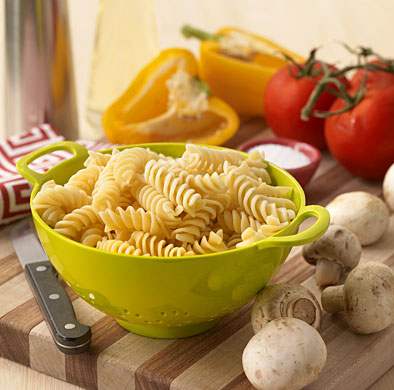
RotiniCooling the starch after heating it rearranges the granules into a shape and structure that make it difficult for our digestive enzymes to access. We don’t derive as many calories from resistant starch as the Nutrition Facts label suggests because it passes unabsorbed into the colon. So, a bowl of hot pasta has more calories than a bowl of cold pasta, and the cold pasta (or potatoes, etc.) protects our colon to boot!

T. Colin Campbell: “Let There Be No Doubt: Cows Milk Protein Is An Exceptionally Potent Cancer Promoter”

cheese7When T. Colin Campbell wrote in his book The China Study:

We were finding that high protein intake, in excess of the amount needed for growth, promotes cancer. Like flipping a light switch on and off, we could control cancer promotion merely by changing levels of protein.

The effects of protein feeding on tumor development were nothing less than spectacular. … [In one experiment] all animals that were administered [the carcinogen] aflatoxin and fed the regular 20% levels of casein either were dead or near death from liver tumors at 100 weeks. All animals administered the same level of aflatoxin but fed the low 5% protein diet were alive, active and thrifty, with sleek hair coats at 100 weeks. This was a virtual 100 to 0 score, something almost never seen in research.”

I would never have dreamed that our results up to this point would be so incredibly consistent, biologically plausible and statistically significant.

Let there be no doubt: cows milk protein is an exceptionally potent cancer promoter.

He was criticized for not discussing aspects of cow’s milk and other animal foods which could confound the relationship between animal protein and cancer. Here’s an excerpt from an article by Campbell addressing this concern:

“The adverse effects of animal protein, as illustrated in our laboratory by the effects of casein, are related to their amino acid composition, not to the effects of pasteurization, homogenization, or of the presence of hormones, pesticides, etc. Even though pasteurization and homogenization may cause slight changes in the physical characteristics of proteins, I know of no evidence where amino acid contents are altered by these treatments. This is important because it shows that there will be no difference in the biological effects of animal based protein from grass-fed or feed lot fed animals. Moreover, the casein that we used in our extensive experiments was before hormones were introduced and before factory farming became the norm, thus it mostly represented animals that were grass fed.”
Grass-Fed Animal Agriculture, T. Colin Campbell Foundation

Here’s Campbell in his own words, arguing that “casein (cows milk protein) is the most relevant chemical carcinogen ever tested.”

Dr. Campbell is not extremist or fringe. He spent his career as a biochemist, professor, and research scientist working within mainstream institutions … MIT, Virginia Tech, Cornell. He has “received over 70 grant-years of peer-reviewed research funding (mostly NIH), served on several grant review panels, lectured extensively, and authored over 300 research papers.” He doesn’t just talk about research, he conducts his own, and has had it published in professional, peer-reviewed journals. He has sat on boards and panels and has “actively participated in the development of national and international nutrition policy.”

And after all this, one of his primary messages is … Consumption of animal protein promotes development of cancer.  Consumption of plant protein does not:

Wheat and soy proteins for example did not stimulate cancer development and when wheat protein, which is deficient in the amino acid lysine, was replenished with lysine, it acted just like casein. There have been literally thousands of studies going back many decades showing a similar effect of animal and plant based proteins on body growth and other events associated with body growth–all resulting from their differences in amino acid compositions.

A problem with eating a low-carb diet is that, by default, it has you eating more fat and protein, and that protein is primarily derived from animal foods.

You’ve Just Been Diagnosed With Cancer. What Should You Eat?

EatMorVeg2You’ve just been diagnosed with cancer. What should you eat? A low-carb, Atkins-like diet? A Paleo diet? A vegetarian diet? The Mediterranean Diet? It doesn’t matter? A group of researchers sought to answer this question by applying the precautionary principle to evidence for which a dietary influence on cancer risk was substantial. Their work was published last month:

Applying the Precautionary Principle to Nutrition and Cancer, Journal of the American College of Nutrition, 28 May 2014

The precautionary principle is a scientifically and legally defined concept based on the view that there is a social responsibility to protect the public from harm when investigation has found a plausible risk. It places the burden of proof on those recommending the risk.

For example, the current body of evidence indicates that dairy food increases the risk for prostate cancer.  Applying the precautionary principle would have us limit our consumption of dairy.  Those recommending consumption of dairy must show that it does not contribute to cancer.

Based on these researchers’ investigation, this is what you should, or shouldn’t eat (“where evidence is sufficiently compelling”):

  • Limit or avoid dairy products to reduce risk of prostate cancer.
  • Limit or avoid alcohol to reduce risk of cancers of the mouth, pharynx, larynx, esophagus, colon, rectum, and breast.
  • Avoid red and processed meat to reduce risk of cancers of the colon and rectum.
  • Avoid grilled, fried, broiled, and other meats (meat here refers to red meat, poultry, and fish) cooked at high temperatures to reduce risk of cancers of the colon, rectum, breast, prostate, kidney, and pancreas.
  • Eat soy products. If comsumed during adolescence they may reduce risk of breast cancer in adulthood. Soy products may also reduce risk of recurrence and mortality for women previously treated for breast cancer.
  • Eat fruits and vegetables to reduce risk of several common forms of cancer.

I’ve picked out some mechanisms:

  • Dairy – Contributes to prostate cancer risk via a large calcium dose that suppresses vitamin D activation, and by the tendency of milk to increase serum IGF-I concentrations.
  • Alcohol – Contributes to cancer risk via harmful effects of metabolites of alcohol such as acetaldehyde, via lipid peroxidation, and generation of free-radical oxygen species. Alcohol may also disrupt folate metabolism.
  • Red and Processed Meat – Contributes to cancer risk via abundance of heme iron, nitrites, heterocyclic amine formation, and the overabundance of essential amino acids and other nutrients that promote cell growth.
  • Cooked Animal Foods – Contain heterocyclic amines (HCAs) that are genotoxic, mutagenic compounds formed from creatine and amino acids in cooked skeletal muscle, increasing in concentration with longer cooking times and higher temperatures. The National Toxicology Program lists 4 HCAs as “reasonably anticipated to be a human carcinogens.”
  • Soy – Reduces cancer risk via ability of genistein [a phytoestrogen] to increase apoptosis [cancer cell death] and to reduce cell proliferation and blood vessel growth and to modulate sex hormone effects. Soy and other legumes are high in beneficial antioxidants.
  • Fruits and Vegetables – Reduces cancer risk via antioxidants which limit reactive oxygen species. Some components may have antitumor properties, such as glycosylates (a precursor to isothiocyanates) and indole-3-carbonol (precursor to 3,3′-diindolylmethane), which have been shown to induce phase II enzymes responsible for eliminating reactive oxygen species and repairing DNA systems. Some components in soybeans, green tea, turmeric, grapes, tomatoes, and other plant foods have the ability to regulate apoptosis, an important pathway for cancer prevention.

They conclude:

“Overall, evidence suggests that diets emphasizing foods from plant sources—vegetables, fruits, whole grains, and legumes — are associated with lower cancer risk.”

Harvard: “Dairy Food Is One Of The Most Consistent Predictors For Prostate Cancer In The Published Literature”

WolverineGotMilkI want to put that last study about dairy food and prostate cancer into perspective. It was a very new, not yet published case-control study:

Dairy Intake And Prostate Cancer Risk: Results From The California Collaborative Prostate Cancer Study, Abstract PD31-06

Data from 2953 cases and controls were analyzed. From MedPageToday:

“Compared with men who reported rarely or never drinking milk, low intake was associated with a 33% increase in the odds of advanced prostate cancer, increasing to 43% among men reporting high intake (P=0.037 for trend).”

Let’s contrast that with the findings of the Physician’s Health Study:

Dairy Products, Calcium, And Prostate Cancer Risk In The Physicians’ Health Study, American Journal of Clinical Nutrition, 2001

It found a 34% increased risk for prostate cancer for men consuming more than 2.5 servings of dairy per day, compared with men consuming less than a half serving, and concluded:

“These results support the hypothesis that dairy products and calcium are associated with a greater risk of prostate cancer.”

Here’s an excerpt from a Harvard Health Publication on diet and prostate cancer:

“A diet high in dairy products has also been implicated as a risk factor for prostate cancer, and this relationship may have little to do with fat. In nine separate studies, the strongest and most consistent dietary factor linked with prostate cancer was high consumption of milk or dairy products. In the largest of these, the Health Professionals Follow-Up Study, men who drank two or more glasses of milk a day were almost twice as likely to develop advanced or metastatic (spreading) prostate cancer as those who didn’t drink milk at all.”
– Prostate Disease: Finding the Cause and Cure, a Harvard Health Publications Special Health report (2003)

Here’s a 2001 Harvard review of the body of evidence at that time on dairy intake and prostate cancer:

Dairy Products, Calcium, and Vitamin D and Risk of Prostate Cancer, Epidemiological Reviews, 2001

“Seven of 14 case-control and five of nine cohort studies have reported statistically significant positive associations between some aspect of dairy intake and prostate cancer risk. Overall, 12 of the 14 case-control studies and seven of the nine cohort studies observed a positive association for some measure of dairy products and prostate cancer; this is one of the most consistent dietary predictors for prostate cancer in the published literature.”

So, this recent study isn’t unique, it just adds to the large and growing body of evidence linking dairy food to prostate cancer. Why do you suppose this isn’t common knowledge?

High Carb, High Fiber, No Dairy: All Linked To Lower Prostate Cancer Risk

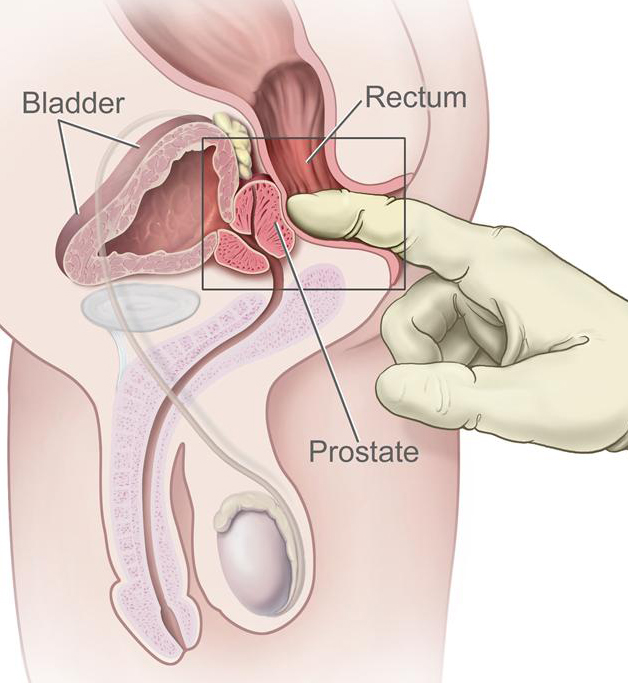
ProstateGraphic2Here are three abstracts from this year’s American Urological Association meeting. All of them provide evidence for eating a whole food, plant-based diet to reduce the risk for prostate cancer.

(To read the abstract, visit the  abstract search page and enter the PD number in the “Publication Number” field.)

1. Carbohydrate Intake, Glycemic Index, And Prostate Cancer Risk, Abstract PD31-11.

This study analyzed data from 430 veterans’ medical records. Those eating the most carbohydrate had up to a 75% lower risk for prostate cancer compared with those eating the least. High fiber intake was also associated with a significant reduction in prostate cancer. Interestingly, these researchers conducted this study because they thought that a high-carbohydrate diet was a risk factor for prostate cancer. They found the opposite.

“Conclusions: Among men consuming a Western diet, our findings suggest higher carbohydrate intake and thereby lower intake of other macronutrients (i.e. protein and fat) may be associated with reduced risk of overall [prostate cancer] and both low- and high-grade [prostate cancer]. … When examining the [glycemic index] of the diet, there was no association.”

2. Dairy Intake And Prostate Cancer Risk: Results From The California Collaborative Prostate Cancer Study, Abstract PD31-06

Data from 2953 cases and controls were analyzed. From MedPageToday: “Compared with men who reported rarely or never drinking milk, low intake was associated with a 33% increase in the odds of advanced prostate cancer, increasing to 43% among men reporting high intake (P=0.037 for trend).”

“Conclusions: These finding suggest that even though most of the putative effect of dairy products on [prostate cancer] risk seems to be explained by calcium, among men with overall low levels of calcium from diet and supplements, high intake of dairy products seems to have a separate effect, suggesting additional components in dairy that may contribute to prostate cancer development.”

3. Metabolic Syndrome Components And Prostate Cancer Risk: Results From The REDUCE Study, Abstract PD31-01

This study analyzed data from 6,426 men who took part in the REDUCE trial (Avodart/dutasteride vs. placebo, Avodart is used for BPH). Men with two components of the Metabolic Syndrome had a 35% increased risk for prostate cancer; men with 3 or more components had a 94% increased risk.

Metabolic Syndrome consists of these 5 components. Having 3 or more means you likely have Metabolic Syndrome, and now, apparently, a higher risk for prostate cancer:

  • Abdominal obesity (high waist circumference)
  • Elevated blood pressure
  • Elevated triglycerides
  • Low HDL cholesterol
  • Elevated fasting glucose

“Conclusions: Men with multiple [Metabolic Syndrome] components may be at higher risk of being diagnosed specifically with high-grade [prostate cancer].”

If the claims made by low-carb enthusiasts are true … that eating a low-carbohydrate, high-fat, high-protein, high animal food diet lowers the risk for cancer, why do so many studies point to the opposite?

Study: Drinking Alcohol Every Day Can Shorten Life

JapaneseMenDrinking3

The source for this photo, GlobalVoicesOnline.org, says that in Japan, drinking can be a social obligation.

Here’s another study that addresses, not just amount of alcohol consumed, but frequency … how many days a week one drinks at all.  It’s much bigger than the one I just posted. It analyzed data from 88,746 men and women from Japan and found the same thing, that drinking alcohol every day can shorten life:

Patterns Of Alcohol Drinking And All-Cause Mortality: Results From A Large-Scale Population-Based Cohort Study In Japan, American Journal of Epidemiology, May 2007

The deleterious effects of alcohol seem to be mitigated by abstaining for a few days a week. The Japanese call this a “liver holiday,” which “is considered important for general health and for maintaining the metabolic function of the liver.”

This study defined a heavy drinker as someone who consumed more than 300 grams of ethanol a week. I had to run the numbers to understand that:

  • 5 ounces of wine at 12% alcohol is 0.6 ounces or about 17 grams ethanol.
  • 12 ounces of beer at 6% alcohol is 0.72 ounces or about 20 grams ethanol.

300 grams works out to 2.5 glasses of wine a day (a small glass: 5 ounces) or 2 glasses of beer a day (12 ounces). If you drank this amount or more, you were considered a heavy drinker.

However, in the US, a heavy drinker (from the US Cancer Prevention Study) was someone who consumed more than 30 g of alcohol per day, so more than 9 ounces of wine (a little less than 2 glasses) or 1.5 beers.

“The highest hazard ratios [were] observed among those consuming ≥450 g of alcohol 5–7 days per week.”

That about 3.5 small (5oz) glasses of wine or 3 (12oz) beers a day. That was the riskiest.

“The increased risk of all-cause mortality associated with frequency of alcohol intake was seen among heavy drinkers only (≥300 g alcohol/week).”

That’s telling. It says that if you drank less than 2 drinks a day, you didn’t experience increased risk, in this study at least.

This following bit is interesting … The researchers found that most of these alcohol-related deaths were from cancer. What’s the mechanism? The NIH says that the body first…

“… metabolizes alcohol to acetaldehyde, a highly toxic substance and known carcinogen. Then, in a second step, acetaldehyde is further metabolized down to another, less active byproduct called acetate, which then is broken down into water and carbon dioxide for easy elimination.”

So, the more you drink, and the more often you drink, the more you expose your tissues (especially liver, pancreas, and brain) to acetaldehyde, “a known carcinogen.”

I imagine that future guidelines for alcohol consumption in the US will address frequency as well as amount, incorporating “three alcohol-free days a week” into the “1 drink for women and 2 drinks for men” advice. … As long as the wine, beer, and spirits lobbies don’t nip it.