Monthly Archives: January 2015

First Autopsy Study Of An Okinawan Centenarian: Absence of Many Age-Related Diseases

OkinawanDiet4

This photo of a centenarian from Okinawa (she’s not the woman in this study) is a still image from National Geographic’s video Secrets of Living Longer. It a great little video, very uplifting!

This is a fascinating discussion about the physical state of a 100-year-old woman from Okinawa at her death:

First Autopsy Study Of An Okinawan Centenarian: Absence of Many Age-Related Diseases, J Gerontol A Biol Sci Med Sci, 2004

Consistent with the compression-of-morbidity hypothesis, several studies have reported that a significant proportion of centenarians delay or escape age-related diseases. Of those who live with such diseases for a long time, many appear to do so with better functional status than do younger persons who do not achieve extreme old age. The authors describe the first autopsy in an Okinawan-Japanese centenarian who escaped many age-related illnesses and delayed frailty toward the end of her very long life.

CompressionOfMorbidityCurve“Compression of morbidity” refers to the compressing or shortening of time between illness and death. If there is a lot of compression, someone remains relatively healthy until a brief time before they die (green line in graph). If there is not much compression, someone becomes more sick and frail as they age (blue lines in graph). If you want a long healthy life, you need to postpone the onset of chronic disease (like diabetes, heart disease, cancer), as this woman did.

Here’s some background on this woman:

A 100-year-old woman came to Chubu Hospital in Okinawa, Japan because of shortness of breath. The patient had been healthy until very late in life, when, in short succession, she suffered a T7 compression fracture at age 92 years, two hip fractures at ages 97 and 98 years that were treated with prosthetic replacements, and bronchitis requiring 6 weeks’ hospitalization at age 99 years. She had no history of congestive heart failure, myocardial infarction, angina, stroke, hypertension, diabetes, tuberculosis, other pulmonary disease, or cancer. Cognitive impairment was first noted by her daughter and her physician at age 98 years. She did not take any medications. She lived her entire life in Okinawa, where she worked for many years as a farmer. As a young woman, she smoked 2 to 3 cigarettes per day, and she had no history of alcohol use. She used a wheelchair after the second hip fracture and depended on her family for assistance with all activities of daily living.

Note that the cognitive impairment did not occur until after her two major hip replacement surgeries. Surgery and exposure to anesthesia is known to disrupt brain function, especially in the elderly. I’m curious about that “2 to 3 cigarettes per day.” I wonder if they meant 2 to 3 packs, because you can be exposed to more background or second-hand smoke than just a couple cigarettes would give.

It looks like the cause of death, in the end, was pneumonia:

The patient was admitted to the hospital and received intravenous fluids and oxygen. … After 3 weeks in the hospital on antibiotic therapy, the patient became depressed, expressed thoughts of dying, and refused to eat. …The patient’s family requested that no aggressive measures be taken to prolong the patient’s life and that all phlebotomy stop. … Nearly 6 weeks after admission, the patient suddenly experienced loose bloody stools, her oxygen saturation rate quickly decreased to 60%, and she died.

And here’s a bit about her health at death:

That the patient’s coronary vessels were free of atherosclerotic narrowing and calcification is remarkable given autopsy reports on white centenarians (those aged 100 to 103 years) and other exceptional survivors (those aged 90 to 103 years), which show coronary vessel narrowing in 66% of patients and coronary calcification in 84% to 97% of patients (5,6). This finding is consistent with the low incidence of and mortality from cardiovascular disease in Okinawa compared with Japan overall and the United States (1,2,8).

The patient’s kidneys, like the heart and stomach, appeared remarkably healthy. The usual age-associated changes in kidney structure include loss of 30%–50% of cortical glomeruli by the seventh decade and sclerosis of up to 30% of the remaining glomeruli (13). In this case, 90% of the glomeruli had no sclerosis and there appeared to be no loss in total number.

Her heart, digestion, and kidneys were all healthy and could have provided additional years of high-quality life. Her weaknesses were her bones and her lungs. The authors suggest that her lung ailments developed through exposure to various environmental pollutants, e.g cigarette smoke and farming chemicals. They didn’t mention the extraordinary levels of toxic waste strewn around the island from US military bases. Indeed, Okinawa is nicknamed “the junk heap of the Pacific.” Three of its rivers rank among the five most polluted rivers in Japan.

With all that pollution, it’s notable she never had any cancer. In fact, Okinawans as a population have cancer rates orders of magnitude lower than ours, especially cancers of the breast and prostate. Although those rates have been creeping up as their diet becomes more Westernized. The more I read, the more I am convinced that diet plays a key role in cancer, both development and progression, as well as other chronic diseases.

What did this woman eat? This table provides some clues (from Traditional Okinawan Diet: Sweet Potatoes):

OkinawanDiet1

She would have been in her mid 40s at the time of this data, so during mid-life at least, she probably got most of her calories from carbohydrates (carbs supplied 85% of calories here) especially sweet potatoes with some rice, beans, and vegetables. Hers was likely a very low-fat (6% of calories), low-protein, high-carbohydrate diet, the kind of starch-based diet that Dr. McDougall might rubber-stamp.

By the way, Willcox’s data also reveal that Okinawans consumed a mere 2% of the RDA for vitamin D (compared to 31% on Japan mainland), and just 27% of the RDA for vitamin B12 or 0.6 micrograms a day. They also failed to meet the RDA for calcium and zinc. Still, many lived long and healthful lives.

The authors of this autopsy study said there are three variables that predict longevity, “genetic predisposition, lifestyle choices, and chance.” Two of those, genes and chance, are out of our control. Lifestyle isn’t. And what we eat is a big chunk of “lifestyle.”

It is not inevitable that we will become increasingly sick and frail as we age.
Popcorn Has About Double The Antioxidants Of Fruits And Vegetables

Popcorn2Popcorn: The Snack With Even Higher Antioxidants Levels Than Fruits And Vegetables, Presented at a meeting of the American Chemical Society, March 2012

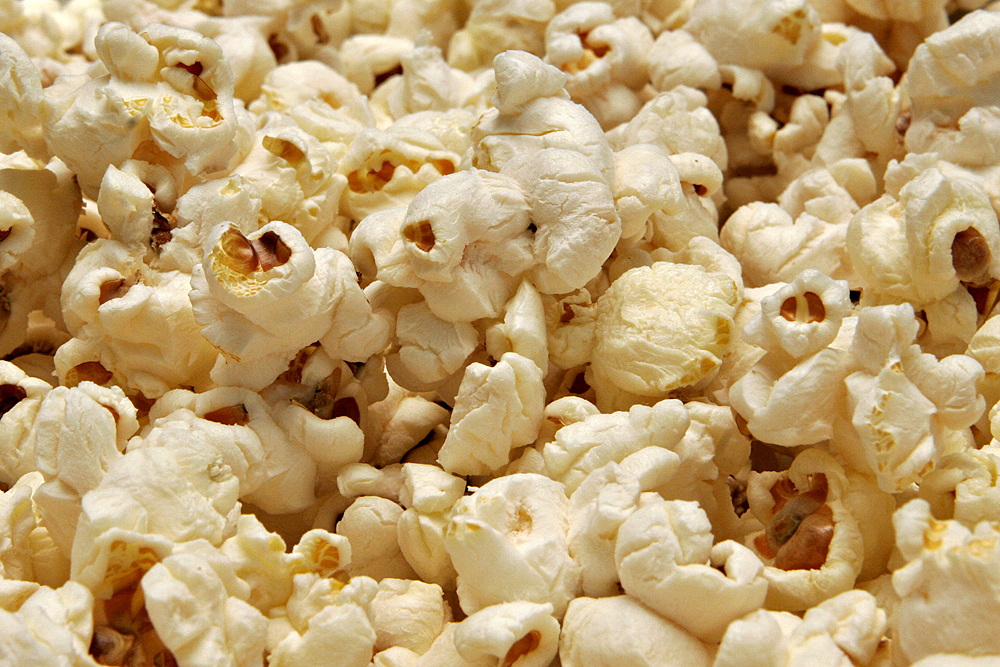
The amount of polyphenols found in popcorn was up to 300 mg a serving compared to 114 mg for a serving of sweet corn and 160 mg for all fruits per serving. In addition, one serving of popcorn would provide 13 percent of an average intake of polyphenols a day per person in the U.S. Fruits provide 255 mg per day of polyphenols and vegetables provide 218 mg per day to the average U.S. diet.

The levels of polyphenols rivaled those in nuts and were up to 15 times greater than whole-grain tortilla chips.

The hulls of the popcorn — the part that everyone hates for its tendency to get caught in the teeth — actually has the highest concentration of polyphenols and fiber.

Popcorn may be the perfect snack food. It’s the only snack that is 100 percent unprocessed whole grain.

If most of the polyphenols reside in the hulls, do we digest them enough to get the benefit? Dr. Joe Vinson, the study’s lead researcher, did a “digestion simulation”:

“We did our own digestion (research) that doesn’t use enzymes, and you as a human being have enzymes and different pH changes to digest food,” he said.

So there’s a good chance those antioxidants are getting digested and absorbed.

Popcorn is whole grain, high in fiber, low in fat, low in calories, and high in antioxidants. There’s not a lot out there that can compete with that.

Stress Prevents Us From Feeling Empathy For Strangers

Empathy4This new study found that stress prevents us from feeling empathy for people we don’t know, and that alleviating stress opens us up for feeling that empathy:

Reducing Social Stress Elicits Emotional Contagion of Pain in Mouse and Human Strangers, Current Biology, Online 15 January 2015

Empathy for another’s physical pain has been demonstrated in humans [ 1 ] and mice [ 2 ]; in both species, empathy is stronger between familiars. Stress levels in stranger dyads are higher than in cagemate dyads or isolated mice [ 2, 3 ], suggesting that stress might be responsible for the absence of empathy for the pain of strangers. We show here that blockade of glucocorticoid synthesis or receptors for adrenal stress hormones elicits the expression of emotional contagion (a form of empathy) in strangers of both species. Mice and undergraduates were tested for sensitivity to noxious stimulation alone and/or together (dyads). In familiar, but not stranger, pairs, dyadic testing was associated with increased pain behaviors or ratings compared to isolated testing. Pharmacological blockade of glucocorticoid synthesis or glucocorticoid and mineralocorticoid receptors enabled the expression of emotional contagion of pain in mouse and human stranger dyads, as did a shared gaming experience (the video game Rock Band) in human strangers. Our results demonstrate that emotional contagion is prevented, in an evolutionarily conserved manner, by the stress of a social interaction with an unfamiliar conspecific and can be evoked by blocking the endocrine stress response.

Some things I’ve learned:

  • “The impact of stress on empathy appeared to be identical in mice and humans. … Mice are either more complicated than we think or the principle underlying human social interactions is simpler than we think.” – Dr Jeffrey Mogil, study author and neuroscientist from McGill University 1
  • Another name for a stranger is an “unfamiliar conspecific.”
  • “Playing a fun video game”1 with a stranger can reduce stress as much as drugs, at least in undergraduates.

1Stress Is ‘Barrier To Feeling Empathy For Strangers’, BBC, 15 January 2015

“Starch-Based” Better Than “Vegan” Or “Whole Food Plant-Based”

Here are some clips of Dr. McDougall from a panel discussion at the October 2014 Healthy Lifestyle Expo. He stresses the importance of words:

Dr. McDougall is 68 years old here. When he was 18, he, in his words, “suffered a massive stroke that left me completely paralyzed on the left side of my body for 2 weeks, and I remain noticeably physically weakened [to this day].” Something he did in the time between his stroke and today prevented a recurrence. He would tell you it was his starch-based diet. I’m inclined to believe him.

Some excerpts:

I have no idea what a vegan diet is or do I have any hope that a vegan diet would cure anybody of anything. But I know a starch-based diet does.

The most important thing is to get most of your calories from starches with a few from vegetables and fruits.

I have to say that “whole food, plant-based” still doesn’t give me the direction I want. … Is that kale? Is that cabbage? What is it? It’s just not descriptive enough for me.

This next bit about the risks of using scientific terms that many people don’t understand, instead of food terms that everyone can relate to is something I’ve gone on about. He’s absolutely right here:

What in the hell is a complex carbohydrate?

What’s a saturated fat? It’s meat, dairy, and eggs. You see, if they [USDA and Dietary Guideline authors] said, don’t eat meat, dairy, and eggs, the American consumer might stand a chance. But industry would suffer. So they don’t allow that, those terms, in guideline policies. Likewise they’ve eliminated the word starch so you can’t act as a consumer. You don’t know what to eat. You eat complex carbohydrate … What!? The words are important.

Here’s why I’ve come to believe that McDougall’s starch-based diet is the best diet. If you cut back on animal food – meat, cheese, dairy, eggs – where do you go for your calories? Broccoli and kale? Lettuce and tomatoes? Strawberries and lemons and apples? Modern humans don’t thrive on a diet of fruits and vegetables. Richard Wrangham made this point in his book, Catching Fire. We would have to eat for hours a day. This is especially true if the food is raw. But if you make starches the core of your diet, with vegetables and fruits as satellites, you won’t court hunger, and you’ll benefit from not consuming animal foods.

I’ve seen people fail on vegetarian and vegan diets for exactly the reasons he gives. Even if they avoid processed foods and stick to vegetables and salads, some bread, maybe some cheese and eggs, they feel weak and poorly nourished. So, they add nuts and seeds and dried fruit and more calorically dense foods like avocado, peanuts, and oils but they still don’t feel well. They end up abandoning the vegetarian diet altogether.

What McDougall suggests, and what I’m slowly come to realize, is that you go for the starch. Whenever you get hungry, eat starch. Eat a bowl of oatmeal or any hot cereal, a bowl of pasta, a baked sweet potato, some oil-less potato salad, fat-free oven fries, rice with steamed vegetables, whole grain bread, popcorn, spicy beans or lentils, barley and mushroom soup, fat-free hummus with pita, fresh corn, quinoa…


Are Almonds A Low-Fat Food? Yes, It’s Looking More And More Like They Are

AlmondServing3NutritionData says that 1 ounce of raw whole almonds, about 23 nuts, provides 162 calories, 117 of those calories (72%) coming from fat. As we’ve seen , that’s not how many calories or how much fat we get when we eat them. (See: We Absorb Fewer Calories When We Eat Whole Foods – The Case Of Almonds). That study found that almonds’ calories are overestimated by up to 32% since our digestion is not 100% effective at releasing nutrients, e.g. fat, from the almonds before they exit our body.

Here’s a new study from London that provides more evidence for this:

Effect Of Mastication On Lipid Bioaccessibility Of Almonds In A Randomized Human Study And Its Implications For Digestion Kinetics, Metabolizable Energy, And Postprandial Lipemia, American Journal of Clinical Nutrition, January, 2015

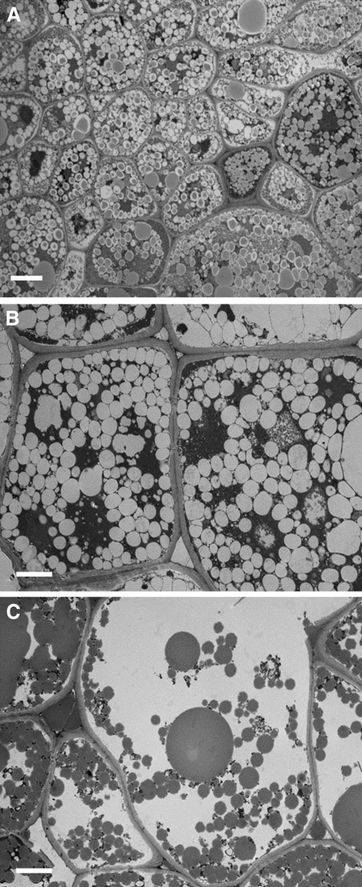
Conclusions: Following mastication, most of the almond cells remained intact with lipid encapsulated by cell walls. Thus, most of the lipid in masticated almonds is not immediately bioaccessible and remains unavailable for early stages of digestion. The lipid encapsulation mechanism provides a convincing explanation for why almonds have a low metabolizable energy content and an attenuated impact on postprandial lipemia.

AlmondCells2

This is an electron microscope image of almond cells that, as you can see, remained intact after chewing, making their nutrients unavailable for absorption. Those little white circles in image B are fat droplets.

The subjects chewed raw or roasted whole almonds, then spit them out. These were young, healthy subjects whose chewing apparatus was intact. Upon analysis, only 8.5% and 11.3% (raw and roasted) of the fat in the almonds was released by chewing.

If a 1 ounce serving of raw almonds has 14 grams of fat, only 1 gram of that fat (8.5%) was liberated for absorption via chewing in this study. You read that right.

“In the present study, we have shown that the proportion of lipid released from the almonds following mastication is severely limited.”

There’s something else going on … When the pieces of food we swallow after chewing are large (in the range of 1 to 2 millimeters), it delays emptying of the stomach…

“… because [these pieces] cannot pass through the pylorus (the so-called sieving effect), inducing a feeling of fullness and lower subsequent energy intake.”

So, not only do the almonds themselves not provide as many calories and as much fat as we’d expect, but eating them causes us to feel full and eat less, assisting weight loss.

In conclusion, we have developed a new method for determining lipid bioaccessibility of masticated almonds, showing that most lipid (∼89–92%) is retained within the tissue matrix (i.e., as intracellular lipid). An encapsulated lipid mechanism provides a plausible explanation of why almonds elicit a low postprandial lipemic response and have a low metabolizable energy content despite their status as a high energy density food. This mechanism may also partly explain the sustained weight loss induced by an almond-enriched diet.

Perhaps this is why the men in that pistachio study could add – a pure add, not a substitution – 120 whole pistachios a day to their diets and not gain weight or increase their BMI or waist circumference. Nuts, as we’re coming to learn, especially raw, whole nuts have an undeserved bad reputation among dieters.

New Study: Whole Grains Associated With Longer Life

WheatBarleyHotCereal2

Double, double toil and trouble. Fire burn, and cauldron bubble…

WheatBarleyHotCereal3

… Voila! Whole wheat, barley, and spelt hot cereal with cinnamon and raisins. (Soak the grains overnight, cook for an hour in the morning, add raisins and cinnamon during the last 5 minutes.)

This was a large, long-term study. (74,341 women from the Nurses’ Health Study, 43,990 men from the Health Professionals Follow-Up Study, 25 years follow-up). Those who ate the most vs. the least whole grains lived longer.

Study: Association Between Dietary Whole Grain Intake And Risk Of Mortality, Two Large Prospective Studies In US Men And Women, JAMA Internal Medicine, 5 January, 2015

Press Release: More Whole Grains Linked With Lower Mortality, Harvard School of Public Health, 5 January 2015

Whole grains included “brown rice, dark breads, whole-grain ready-to-eat cereals, cooked cereal, popcorn, bran, and other grains.” I left out “wheat germ” from this quote because they did not find a benefit for it.

Eating bran had an especially strong effect, as did replacing meat with grains:

Eating more whole grains is associated with up to 15% lower mortality – particularly cardiovascular disease (CVD)-related mortality. … Bran intake was linked with a 20% lower CVD-related mortality. … Swapping just one serving of red meat with one serving of whole grains was linked with a 20% lower CVD-related mortality.

They didn’t have to eat much:

“For each serving of whole grains (28g/day), overall mortality dropped by 5%, and by 9% for CVD-related mortality.”

28 grams is just one ounce, about 1/3 cup of dry oatmeal.

Dr. Qi Sun from Harvard, an author of this study, said whole grain eaters “did have much healthier habits than non-whole grain eaters, but our model controls for that.”

Related study: Dietary Fiber Intake And Total Mortality: A Meta-Analysis of Prospective Cohort Studies, American Journal of Epidemiology, September 2014, “In conclusion, high dietary fiber intake may reduce the risk of total mortality.” They found a 23% lower mortality risk for eating high fiber, especially cereal fiber.

If it’s true that eating whole grains makes us sick, as several diet book authors claim, why do people who eat the most live the longest?

Are Mini-Strokes And Cognitive Decline An Acceptable Cost Of Bypass Surgery?

PostopDelirium2I first heard the terms “bypass brain” and “pump head” from this article:

‘Bypass Brain’: How Surgery May Affect Mental Acuity, Wall Street Journal, June 2008

Cognitive damage from heart bypass surgery, a condition dubbed “pump head” or “bypass brain,” has long been recognized by doctors, even if they seldom warn patients about it.

Symptoms include short-term memory loss, slowed responses, trouble concentrating and emotional instability. In a landmark study published in the New England Journal of Medicine in 2001*, researchers at Duke University Medical Center tested 261 patients before and after bypass surgery and found that 53% of them had significant cognitive decline when they were discharged — and 42% still suffered from it five years later.

One explanation is that when a patient’s blood is pumped through a heart-lung machine during bypass, tiny air bubbles, fat globules and other particles may enter the bloodstream. The pump can also damage platelets, which form clumps, and clamping the aorta loosens bits of plaque. That debris can travel to the brain and clog tiny capillaries, forming microscopic strokes.

What if you don’t use a blood pump during surgery? It doesn’t seem to make a difference:

But studies have found that cognitive decline is just as common five years later in patients who had on-pump or off-pump bypasses.

Here’s the conclusion from that highly-cited NEJM study:

CONCLUSIONS: These results confirm the relatively high prevalence and persistence of cognitive decline after CABG and suggest a pattern of early improvement followed by a later decline that is predicted by the presence of early postoperative cognitive decline. Interventions to prevent or reduce short- and long-term cognitive decline after cardiac surgery are warranted.

I went looking to see if it’s still a problem. This review from a few months ago says it’s still a problem, and it’s getting worse:

Cerebral Dysfunction After Coronary Artery Bypass Surgery, Journal of Anesthesia, April 2014

Cerebral dysfunction after cardiac surgery remains a devastating complication and is growing in importance with our aging populations.