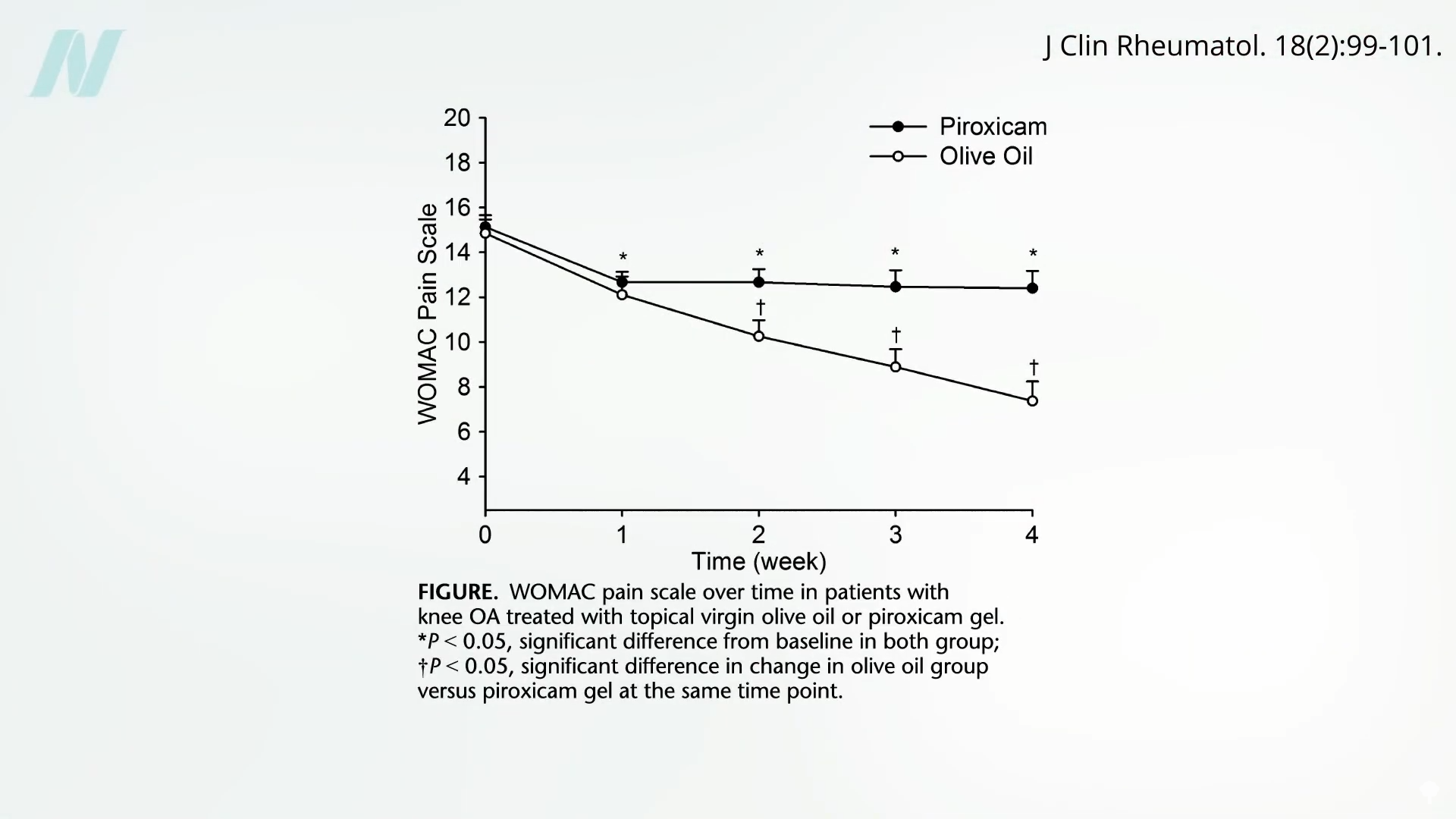
“Topical virgin olive oil went up against a gel containing an ibuprofen-type drug for osteoarthritis of the knee in a double-blind, randomized, clinical trial. Just a gram of oil, which is less than a quarter teaspoon, three times a day, costing less than three cents a day, worked! Topical olive oil was significantly better than the drug in reducing pain.”
Dr. Greger: “The ease of adulterating extra virgin olive oil, the difficulty of detection, the economic drivers, and the lack of control measures all contribute to extra virgin olive oil’s susceptibility to fraud.”
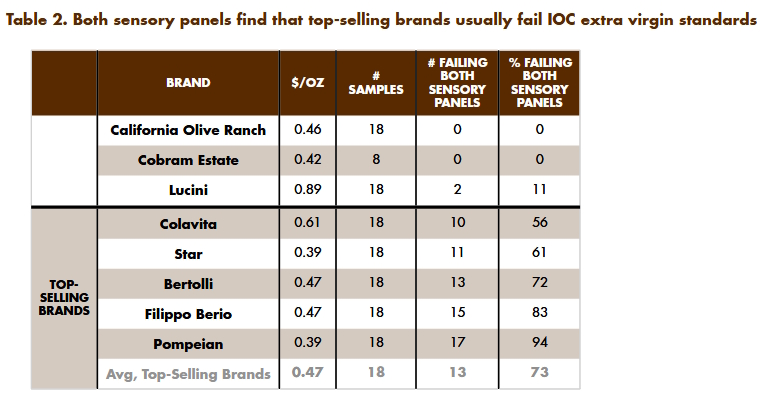
Of the five top-selling imported “extra virgin” olive oil brands in the United States, 73 percent of the samples failed the IOC sensory standards for extra virgin olive oils.
Our testing indicated that the samples failed extra virgin olive oil standards for reasons that include one or more of the following:
(a) oxidation by exposure to elevated temperatures, light, and/or aging
(b) adulteration with cheaper refined olive oil
(c) poor quality oil made from damaged and overripe olives, processing flaws, and/or improper oil storage
Conclusions: Our laboratory tests found that the top-selling imported brands of “extra virgin” olive oil sold in the United States and purchased at retail locations throughout California often failed the IOC’s sensory standards for extra virgin olive oil.
I think I am late to the game on this, because when I typed into Google “pharmaceutical drugs in tap water,” an old WebMD article – from 2008 – came up: Drugs In Our Drinking Water?, saying:
Ever since the late 1990s, the science community has recognized that pharmaceuticals, especially oral contraceptives, are found in sewage water and are potentially contaminating drinking water.
So, for 20 or 30 years it was known. The article said that the “deputy director for science and technology in the Office of Water at the EPA” was looking at it.
Here’s an article from a couple months ago. They must be still looking at it.
Currently, wastewater is considered the most important source of drugs to the environment. Furthermore, the currently available wastewater treatment plants are not specifically prepared to remove drugs, so they reach practically all environmental matrices, even tap water.
As drugs are designed to produce pharmacological effects at low concentrations, they are capable of producing ecotoxicological effects on microorganisms, flora and fauna, even on human health.
It has also been observed that certain antidepressants and antipsychotics can bioaccumulate along the food chain.
Possible solutions consist on acting at source, using medicines more rationally, eco-prescribing or prescribing greener drugs, designing pharmaceuticals that are more readily biodegraded, educating both health professionals and citizens, and improving coordination and collaboration between environmental and healthcare sciences.
Besides, end of pipe measures like improving or developing new purification systems (biological, physical, chemical, combination) that eliminate these residues efficiently and at a sustainable cost should be a priority.
“using medicines more rationally”
What does that mean? Are there instances when a physician is not prescribing rationally?
When I thought of chemical pollution, I was more focused on pesticides, industrial chemicals, plastics. Drugs hadn’t been at the top of that list. Welp.
The NIH-AARP study, sponsored by the National Institutes of Health and the American Association of Retired Persons, is the largest forward-looking, in-depth study on diet and health in history. Based on its six million person-years of observation, replacing just 3 percent of daily caloric intake of animal protein with plant protein was associated with a 10 percent decreased risk of premature death. Just a three percent swap!
Of all the animal protein sources, eggs were found to be the worst. Swapping in three percent of plant protein for egg protein was associated with twice the benefit––more than twenty percent lower mortality having scrambled tofu instead. In fact, each half an egg a day was associated with a seven-percent increase in all-cause mortality. Just half an egg? That’s consistent with six other US cohort studies that collectively found that each additional half an egg consumed per day was significantly associated with a higher risk of getting cardiovascular disease and dying prematurely from all causes put together. And this higher risk of death persisted even after taking other lifestyle behaviors into account, including overall dietary quality. In other words, it doesn’t appear to be just because people eating more eggs were also eating more bacon, for example.
A meta-analysis of all such studies confirmed that greater egg consumption confers higher risks of death from all causes. Another meta-analysis including other types of studies involving nearly 12 million participants echoed that it may be prudent to avoid high egg consumption. But what does “high” mean? What’s the safe amount? It’s not quite clear.
One meta-analysis suggested there’s little evidence for elevated risks below half an egg a day, whereas another found that adding even one egg a week to your diet might increase your risk of dying from cancer.
If the data on detriment are so clear, based on studies involving millions of people, why is there still controversy? Because the egg industry manufactures that controversy. Just like the sugar industry does with sugar. Dr. Barnard’s written about it. I’ve written about it.
As noted by the director of the Stroke Prevention and Atherosclerosis Research Centre, “After conviction for false advertising, the industry has spent hundreds of millions of dollars to convince the public, physicians, and policy makers that dietary cholesterol and egg yolk are harmless.” Yet a meta-analysis of more than fifty randomized controlled trials found that egg consumption significantly increases LDL cholesterol.
Online, some bloggers parrot the egg industry’s talking points that the 2015 US dietary guidelines removed the dietary cholesterol limit to consume less than 300 mg of dietary cholesterol a day––whereas if anyone bothered to actually read the actual guidelines they’d see that the guidelines actually strengthen the recommendation, and tell Americans to “eat as little dietary cholesterol as possible,” as recommended by the Institute of Medicine, the most prestigious medical body in the United States. This advice was reiterated in the most recent dietary guidelines: “The National Academies recommends that … dietary cholesterol consumption to be as low as possible,” using the rationale that any intake above zero increases LDL cholesterol concentration in the blood and therefore increases the risk of the number one killer of men and women.
Many of us have tumors growing inside us right now. While most people develop cancer, slowing its growth can help us unknowingly live with it, rather than die from it. Watch the video to learn more.
One cancer cell never hurt anyone; two cancer cells never hurt anyone; but a billion cancer cells, that’s when we start getting into trouble. So, we have to slow—even reverse—the division and growth of cancer cells. We all have cells that could grow into tumors, but if we slow them down, our immune systems may have a chance to clean them up before they hurt us.
Take breast cancer, for example, the most common internal cancer among American women. Like all cancers, it starts with a single cell. This is a photomicrograph (a photograph taken under a microscope) of an actual breast cancer cell, which then divides and becomes two cells, then four, then eight, and so on. Every time the cells divide, the tiny tumor doubles in size. It only needs to double about 30 times, and we’re up to a billion cancer cells—which is a tumor just large enough to be felt and picked up by mammography.
Even though a tumor only has to double 30 times, it may take anywhere from about 50 days to a thousand days for a cancer cell to double just once. So, that means from the time that first cell mutates, it takes between a few years and nearly a century before it grows to show up as a little tumor we can see.
The shortest known interval between exposure to a carcinogen and the development of cancer is about 18 months, which is when some of the first leukemia cases started appearing after Hiroshima. Cancers need time to grow, and for most solid tumors, meaning non-blood tumors, cancer takes decades to develop. Check it out: the ovarian cancer you get diagnosed with at the average age of 62 started growing 44 years earlier. So, you’ve had cancer since you were 18 years old—you just didn’t know it. Some breast cancers may even start in the womb before we’re even born, and may depend in part on what your mom ate.
The process of cancer development happens in stages. The first stage is cancer initiation, the irreversible DNA mutation that turns that first cell bad. But then we move to the promotion stage of cancer, which is reversible. If we don’t promote the tumor growth, it can stay hidden forever, or even disappear. When I was a teen I ate a lot of processed meat—bacon, hot dogs—known human carcinogens, meaning they cause cancer. I very well may have mutated one of the cells in my colon. It can take 50 years for colon cancer to show up after it’s been initiated. Cancer may have been initiated by a DNA mutation, but if we don’t promote it, if we keep it dormant, if we slow it down, we may be able to even reverse its growth. I mean, I don’t care if the cancer shows up a hundred years from now; I don’t imagine I’ll be around to worry about it.
Take prostate cancer. More men die with prostate cancer than because of it. According to autopsy studies in Japan, there is about as much hidden prostate cancer there as we have in the United States. But their risk of dying from prostate cancer was 40 times lower, until they started Westernizing their diets and started eating more like us, with more animal foods and fewer plants.
Japan has among the longest life expectancies, but when Japanese men finally do die, many have tiny prostate tumors. But they die with their cancer, instead of from their cancer. By their 60s, the majority of men—nearly two-thirds—have tiny prostate cancer tumors whether they know it or not, and nearly one in three men in their thirties is already brewing cancer in their prostates. Similarly, if you look at forensic autopsies of middle-aged women, more than a third were already harboring cancer in their breast when they were only in their 40s. Yet the risk of dying from breast cancer at that age is less than one percent. In fact, your cumulative risk of ever dying from breast cancer in your lifetime is less than four percent. So, most breast cancers, just like most prostate cancers, grow so slowly that you can live your whole life not even knowing you have them.
It’s like atherosclerosis. About half of young Americans already have atherosclerotic plaques—hardening of their coronary arteries—by their twenties. So, what we think of as diet and lifestyle prevention for both of our leading killers, heart disease and cancer, may actually be diet and lifestyle treatment.
At this very moment, many of us have tumors growing inside of us; so we can’t wait until later to start eating healthier. We have to start now. How can we slow down and even reverse cancer while it’s still microscopic? Well, for prostate and breast cancers, those tissues tend to be sensitive to growth-promoting hormones.
Scientists from UCLA placed women on a plant-based diet with exercise, and found that the levels of all measured growth hormones in their blood dropped dramatically within just two weeks. What would that do to cancer? The researchers drew the women’s blood before and after those two weeks, and dripped them onto three types of breast cancer cells growing in petri dishes. Here’s the before: cancer growth powering away at 100 percent, and here’s the after. After just two weeks of eating healthfully and walking, the blood of women on the plant-based diet reduced their cancer growth rates by 12 percent. And cancer cell death, apoptosis, shot up by 24 percent. After just two weeks of moving on a plant-based diet, the blood circulating throughout their entire bodies was that much more inhospitable to cancer. At this very moment, many of us have tumors growing inside of us, so we can’t wait until we’re older to start eating and living healthier. We have to start now—tonight.
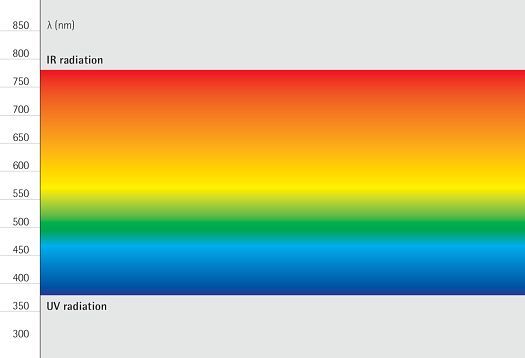
When red light and blue light enter our eyes we’re supposed to see green. But our mind says, “that’s not green,” because our green receptor isn’t firing. So it invents purple.
Because there is not a frequency that corresponds to purple, I suppose that my purple may be just a little bit different from your purple, because each of us create it.
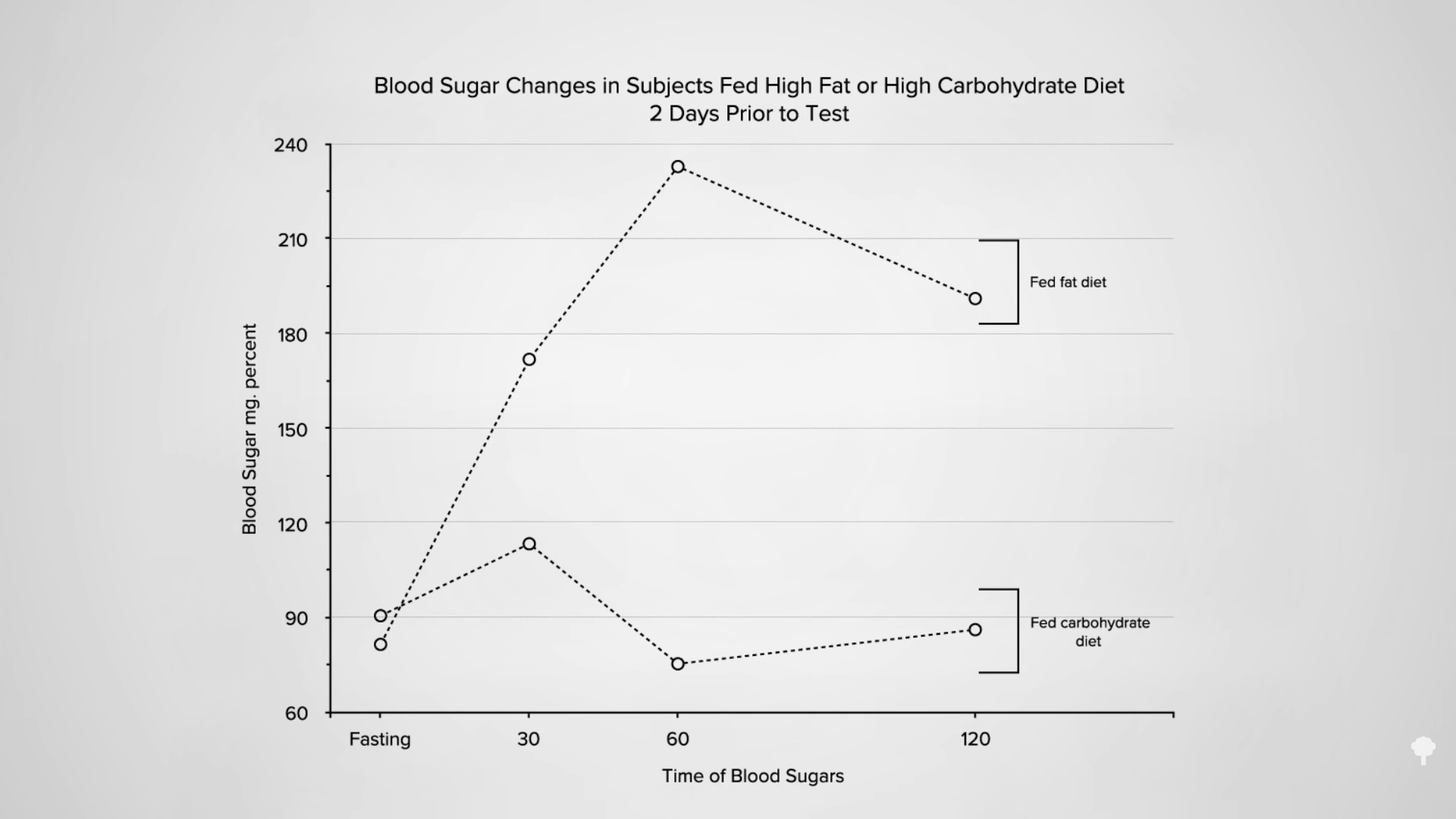
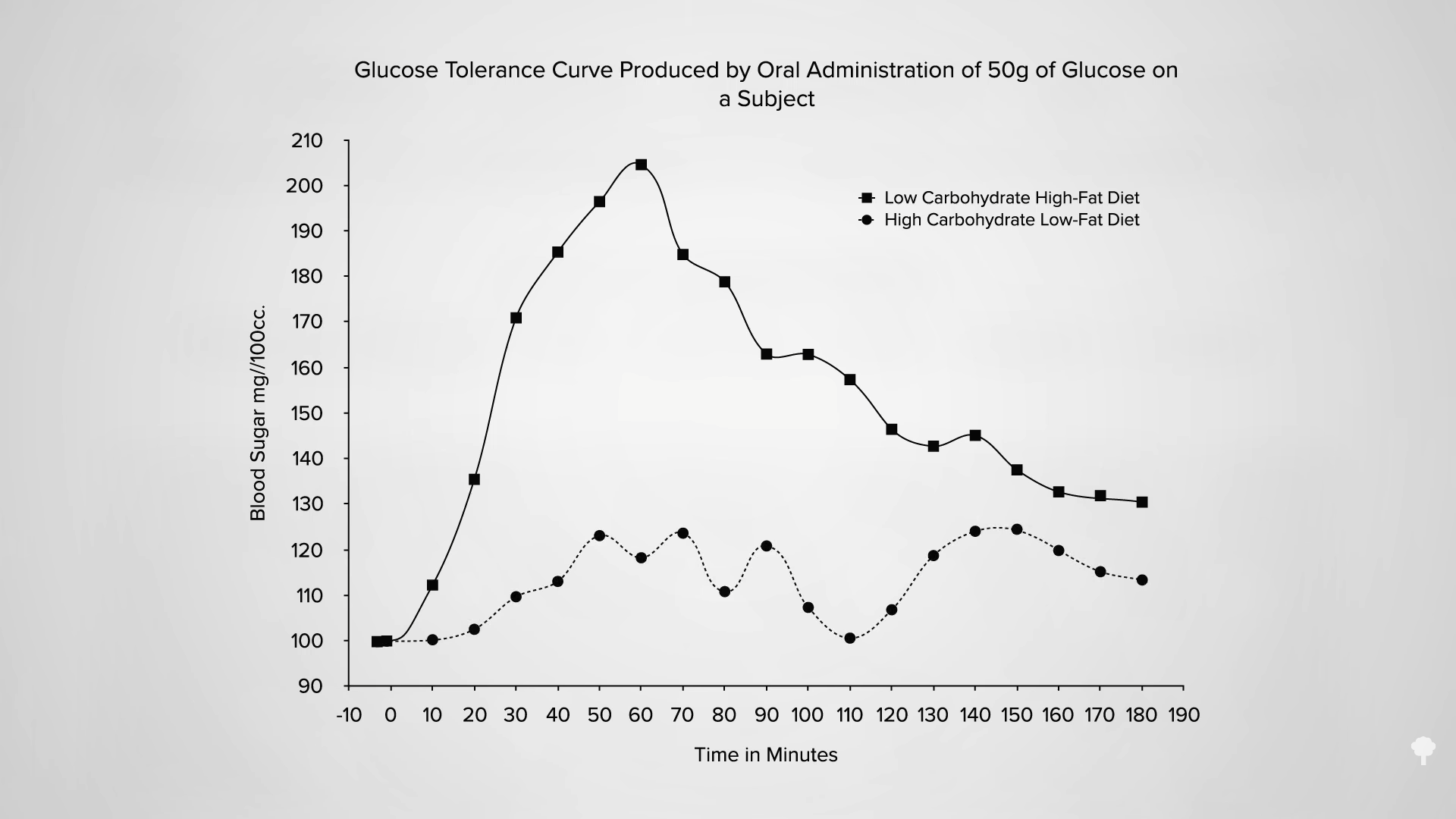
Intolerance to carbohydrates skyrocketed on a high-fat diet.
After one week on an 80 percent fat diet, you can quintuple your blood sugar spike in reaction to the same carb load compared to a week on a low-fat diet. (See below.)
Even a single day of excessive dietary fat intake can do it, as you can see in the graph below.
Clearly, if you stick to eating mostly fat, your blood sugars will stay low, but you may be actually making the underlying disease worse at the same time.
1000 milligrams, a gram, of vitamin C is a lot. The RDA is 75 mg (women), 90 mg (men). An orange has about 60 mg. Studies are finding that vitamin C can inhibit the body’s natural ability to adapt to exercise, blunting the body’s ability to produce its own powerful antioxidants.
Below is an excerpt from a post from my old blog, from February 2009. I’m revisiting it because I just read that a high-end supplement for athletes removed vitamin C from some of their formulations, citing this study and others.
Researchers trained a group of humans and a group of rats. Some received vitamin C.
Findings:
1. Vitamin C reduced endurance.
Training increased the maximal running time in rats [by 186.7%]. However, this increase was prevented by daily supplementation with vitamin C. In the supplemented animals, the running time increased only 26.5%.
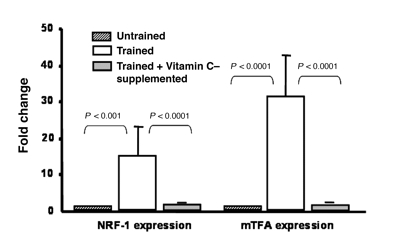
2. Vitamin C reduced the number of mitochondria (energy-producing cells) that bodies make in response to exercise.
The graph below shows the change in level of transcription factors needed for mitochondrial production. Look at the vitamin C group – almost equal to levels in untrained rats.
The number of mitochondria is linked to endurance and fatigue. (See No. 1 above.)
Endurance capacity [time to fatigue] is dependent mainly on the mitochondrial content of skeletal muscle.
3. Vitamin C reduced the amount of endogenous (made by our body) antioxidants.
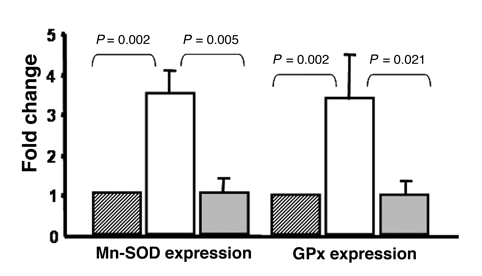
Two antioxidant enzymes, superoxide dismutase and glutathione peroxidase (GP), were found in lower levels in those taking vitamin C. Recall that acrylamide in browned and aged foods is metabolized by GP – a good thing. In fact, GP is widely used in cells to prevent damage from oxidation.
The graph below shows the change in levels of these two antioxidants. Again, the vitamin C group was almost equal to levels in untrained rats.
Exercise generates oxidized compounds. It was thought that by consuming more antioxidants, e.g. vitamin C, we could protect our cells against these oxidized compounds (known as reactive oxygen species: ROS).
We’re finding that ROS aren’t altogether bad. The body uses them as signals. Previous posts discussed this, e.g. the case of too much selenium reducing ROS leading to insulin resistance and weight gain.
In this case, ROS signals the body to make more mitochondria, and more in-house antioxidants. It probably does other things, but this study measured just those variables.
Thus, the common practice of taking vitamin C supplements during training (for both health-related and performance-related physical fitness) should be seriously questioned.
______
The supplement I mentioned at the top of this post, the one that removed vitamin C from formulations, was First Endurance. Here’s an article they posted which pulls together other studies supporting this hypothesis.


 Fanatic Cook