

Category Archives: Saturated Fat

That Saturated Fat Study: Harvard Responds

WalterWillett2

Walter Willett, MD, Dr. PH

Harvard posted Dr. Willett and colleagues’ response to the dietary fat study I’ve been posting about (here and here). Dr. Willett is chair of the Department of Nutrition at Harvard School of Public Health.

Dietary Fat And Heart Disease Study Is Seriously Misleading, Harvard School of Public Health, 19 March 2014

The journal Annals of Internal Medicine recently published a paper suggesting there is no evidence supporting the longstanding recommendation to limit saturated fat consumption. Media reporting on the paper included headlines such as “No link found between saturated fat and heart disease” and articles saying “Saturated fat shouldn’t be demonized” springing up on social media.

Dr. Willett emphasized that because this meta-analysis contains multiple serious errors and omissions, the study conclusions are misleading and should be disregarded.

Here’s Harvard’s official response as it appears on the Annals of Internal Medicine website:

The meta-analysis of dietary fatty acids and risk of coronary heart disease by Chowdhury et al. (1) contains multiple errors and omissions, and the conclusions are seriously misleading, particularly the lack of association with N-6 polyunsaturated fat. For example, two of the six studies included in the analysis of N-6 polyunsaturated fat were wrong. The relative risks for Nurses’ Health Study (NHS) (2) and Kuopio Ischemic Heart Disease Study (KIHD) (3) were retrieved incorrectly and said to be above 1.0. However, in the 20-year follow-up of the NHS the relative risk for highest vs lowest quintile was 0.77 (95 percent CI: 0.62, 0.95); ptrend = 0.01 (the authors seem to have used the RR for N-3 alpha-linolenic acid from a paper on sudden cardiac death), and in the KIHD the relative risk was 0.39; 95% confidence interval [CI], 0.21-0.71) (the origin of the number used in the meta-analysis is unclear). Also, relevant data from other studies were not included (4 and 5).

Further, the authors did not mention a pooled analysis (6) of the primary data from prospective studies, in which a significant inverse association between intake of polyunsaturated fat (the large majority being the N-6 linoleic acid) and risk of CHD was found. Also, in this analysis, substitution of polyunsaturated fat for saturated fat was associated with lower risk of CHD. Chowdhury et al. also failed to point out that most of the monounsaturated fat consumed in their studies was from red meat and dairy sources, and the findings do not necessarily apply to consumption in the form of nuts, olive oil, and other plant sources. Thus, the conclusions of Chowdhury et al. regarding the type of fat being unimportant are seriously misleading and should be disregarded.

Sincerely,

Walter Willett
Frank Sacks
Meir Stampfer

Harvard University

1. Chowdhury R, Warnakula S, Kunutsor S, et al. Association of dietary, circulating, and supplement fatty acids with coronary risk. Ann Intern Med 2014; 160(6):398-406.
2. Oh K, Hu FB, Manson JE, Stampfer MJ, Willett WC. Dietary fat intake and risk of coronary heart disease in women: 20 years of follow-up of the Nurses’ Health Study. Am J Epidemiol 2005;161:672-9.
3. Laaksonen DE, Nyyssonen K, Niskanen L, Rissanen TH, Salonen JT. Prediction of cardiovascular mortality in middle aged men by dietary and serum linoleic and polyunsaturated fatty acids. Arch Intern Med 2005;165:193-199.
4. de Goede J, Geleijnse JM, Boer JM, Kromhout D, Verschuren WM. Linoleic acid intake, plasma cholesterol and 10-year incidence of CHD in 20,000 middle-aged men and women in the Netherlands. Br J Nutr 2012;107:1070-6.
5. Dolecek TA. Epidemiological evidence of relationships between dietary polyunsaturated fatty acids and mortality in the multiple risk factor intervention trial. Proc Soc Exp Biol Med 1992;200:177-82.
6. Jakobsen MU, O’Reilly EJ, Heitmann BL, Pereira MA, Bälter K, Fraser GE, Goldbourt U, Hallmans G, Knekt P, Liu S, Pietinen P, Spiegelman D, Stevens J, Virtamo J, Willett WC, Ascherio A. Major types of dietary fat and risk of coronary heart disease: a pooled analysis of 11 cohort studies. Am J Clin Nutr 2009:1425-32.

After reading this, I am curious how this study in the Annals withstood peer review.

When people think “carbohydrates,” do they think … carrots and apples? Do they think beans and lentils? Or do they think highly processed, white-flour-white-sugar breads, boxed breakfast cereals, bagels, pretzels, crackers, cookies, cakes, muffins? If you are cutting back on fat, especially saturated fat, you will, by default, be eating more carbohydrates. It is the former (carrots, apples, beans, lentils, corn, peas, oats, yams, squash) where carbs should ideally be coming from, not the latter. The former is the essence of a whole food, plant-based diet.

That Saturated Fat Study

One more comment about the fatty acid study I posted about a few days ago, the one that found no difference in cardiovascular disease (CVD) risk between those who ate the most vs. those who ate the least saturated fat:

Association of Dietary, Circulating, and Supplement Fatty Acids With Coronary Risk: A Systematic Review and Meta-analysis, Annals of Internal Medicine, 18 March 2014

One way you can arrive at all your groups showing similar risk, which this study found, is when there isn’t much difference in consumption among your comparison groups. Or when most of your participants are consuming saturated fat above a threshold where risk for CVD increases.

About this meta-analysis, Jeff Novick writes:

“One major problem with this study is they did not look at any studies where the saturated fat intake was less than 7%, which is the level recommended by the [American Heart Association]. … Most of the diets had saturated fat intakes in the range of 10-15% (or more).”

7% is a lot of saturated fat. If someone was eating 2000 calories a day, 7% is about 16 grams of saturated fat. For relativity’s sake, there are 2 grams of saturated fat in a 3 ounce serving of beef chuck. One chicken thigh, just 2 ounces, has 3 grams of saturated fat.

Does reducing saturated fat below 7%, what you would find in a whole food, plant-based (WFPB) diet, reduce CVD risk? This study couldn’t say.

Here’s a study that found replacing saturated fat with polyunsaturated fat reduced risk for heart attack.  (Saturated fat comes primarily from animals – meat and dairy. Polyunsaturated fat comes primarily from plants.)

Effects On Coronary Heart Disease Of Increasing Polyunsaturated Fat In Place Of Saturated Fat: A Systematic Review And Meta-analysis Of Randomized Controlled Trials, PLOS Medicine, March 2010

“Conclusions: These findings provide evidence that consuming PUFA in place of SFA reduces CHD events in RCTs.”*

Here’s the press release: Replacing Those Saturated Fats, Harvard, March 2010

“But a new study by researchers at Harvard School of Public Health (HSPH) provides the first conclusive evidence from randomized clinical trials that people who replace saturated fat in their diet with polyunsaturated fat reduce their risk of coronary heart disease by 19 percent, compared with control groups of people who do not.”

For every 5 percent increase (measured as total energy) in polyunsaturated fat consumption, coronary heart disease risk was reduced by 10 percent.

Remember this? “Give that chicken fat back to the chicken!”

* PUFA: Polyunsaturated Fatty Acids
SFA: Saturated Fatty Acids
CHD: Coronary Heart Disease
RCT: Randomized Controlled Trials

Eating Saturated Fat Contributes To Heart Disease: No Evidence?

SaturatedFatsADAMI think there is a lot of evidence implicating saturated fat in disease. However, there’s a new study which is raising doubt as to the effect of saturated fat on heart disease:

Association of Dietary, Circulating, and Supplement Fatty Acids With Coronary Risk: A Systematic Review and Meta-analysis, Annals of Internal Medicine, 18 March 2014

The New York Times reported on it yesterday:
Study Questions Fat and Heart Disease Link

Someone had anonymously linked the New York Times article on my blog. They made no comment.

It’s a meta-analysis with, the authors admit, “potential biases from preferential publication and selective reporting.” Here’s some data:

In observational studies, when the top and bottom thirds of baseline dietary fatty acid intake were compared, relative risks (RRs) for coronary disease were:

1.02 (95% CI, 0.97 to 1.07) for saturated
0.99 (CI, 0.89 to 1.09) for monounsaturated
0.93 (CI, 0.84 to 1.02) for long-chain ω-3 polyunsaturated
1.01 (CI, 0.96 to 1.07) for ω-6 polyunsaturated
1.16 (CI, 1.06 to 1.27) for trans fatty acids

For circulating fatty acids, RRs were:

1.06 (CI, 0.86 to 1.30)
1.06 (CI, 0.97 to 1.17)
0.84 (CI, 0.63 to 1.11)
0.94 (CI, 0.84 to 1.06)
1.05 (CI, 0.76 to 1.44)

In randomized, controlled trials (RCTs), RRs were:

0.97 (CI, 0.69 to 1.36) for α-linolenic
0.94 (CI, 0.86 to 1.03) for long-chain ω-3 polyunsaturated
0.89 (CI, 0.71 to 1.12) for ω-6 polyunsaturated fatty acid supplementations

Note that circulating trans fatty acids had almost the same RR as saturated fat, in fact, trans fats trended more protective? Note also that in RCTs, omega-6 was more protective than omega-3. There is a lot of inconclusiveness here.

These are effects relative to cardiovascular disease (CVD). They did not look at diabetes, arthritis, cancer, or other inflammatory-based diseases. Even if it is true that saturated fat has no impact on CVD, it has been shown to increase the risk for other chronic diseases.

It’s conclusion:

“Current evidence does not clearly support cardiovascular guidelines that encourage high consumption of polyunsaturated fatty acids and low consumption of total saturated fats.”

“Not clearly.” Does that remind you of anything? Why did this study get published at all? Recall this study:

Long Term Toxicity Of A Roundup Herbicide And A Roundup-Tolerant Genetically Modified Maize, Food and Chemical Toxicology (FTC), 19 September 2012.

It found more breast cancer, liver and kidney damage in rats fed GMOs.

The publisher was hounded by industry groups like Monsanto to retract it. He resisted for a year, defending it!, then gave in saying:

“Unequivocally, the Editor-in-Chief found no evidence of fraud or intentional misrepresentation of the data. … Ultimately, the results presented (while not incorrect) are inconclusive.”

It was retracted, not because it was incorrect, but because it was “inconclusive.” This present study is also inconclusive. The authors admit as much. Shall we expect it to be retracted? Can you think of any industry that would benefit by keeping this study circulating? Industry doesn’t have to combat science, all they have to do is plant seeds of doubt, and they’ve won.

________Here’s yet another reason why I believe saturated fat contributes to the development of chronic diseases. It was buried in the comments on the New York Times article:

“The results of reducing animal fat consumption in Finland led to greatly reduced cardiovascular disease rates.” -wbgrant

Fat and Heart Disease: Yes We Can Make a Change – The Case of North Karelia (Finland), Annals of Nutrition and Metabolism, July 2009

“The combined efforts of all stakeholders have greatly helped people to reduce the intake of saturated fat and to replace this with unsaturated fat. This has been associated with an improved quality of the dietary fat (e.g. in 1972, over 90% of the population used butter on their bread compared to <5% at present) and a remarkable reduction in blood cholesterol levels. It has led to a 80% reduction in annual CVD mortality rates among the working aged population, to a major increase in life expectancy and to major improvements in functional capacity and health.

There is strong medical evidence that CVD (like many other chronic diseases) is preventable or could be delayed to a more advanced age. A population-based prevention programme is the most cost-effective way and in many cases the only affordable option for major public health improvements. To prevent CVD and to promote heart health, dietary changes are crucial, especially the change in the quality of fat. These changes can have a major impact in relatively short time and can lead to dramatic improvements in public health in the long run.”

A Meal High In Saturated Fat Increases Inflammation

SaturatedFatLorenzo'sGrill2

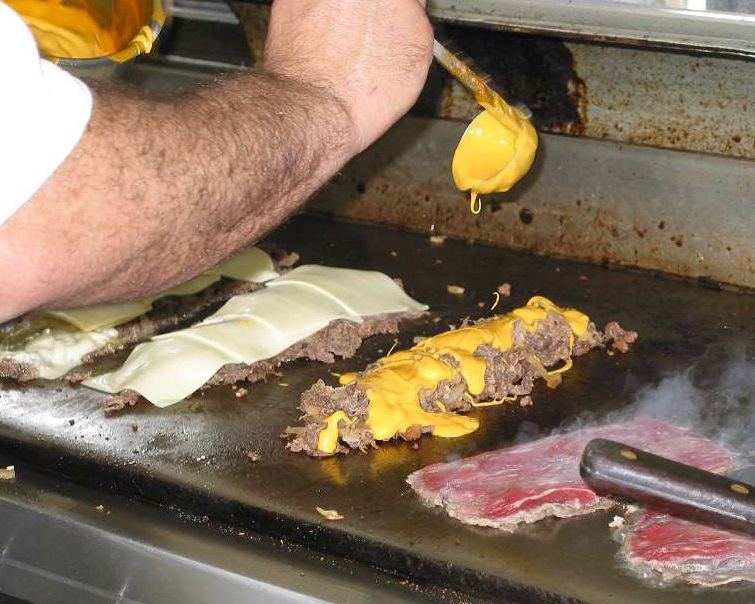
Photo of Lorenzo’s Pizza, on Christian Street in my hometown of Philadelphia. Cheesesteaks are almost synonymous with this city.

My previous post described a study that found eating a meal high in fat, especially saturated fat, increased inflammation in the airways, contributing to asthma.

This post describes a study that found eating a meal high in saturated fat increased systemic (whole body) inflammation.  Consistent, low-grade inflammation is thought to contribute to atherosclerosis, and so, to heart disease.

The Effect Of Two Iso-Caloric Meals Containing Equal Amounts Of Fats With A Different Fat Composition On The Inflammatory And Metabolic Markers In Apparently Healthy Volunteers, Journal of Inflammation (London), January 2013

“Fifty four apparently healthy normal weight volunteers were given two iso-caloric meals with similar amounts but different composition of fats: a meal high in monounsaturated fats (MUFA), and a meal high in saturated fat (SFA).

The main finding of the present study was the elevation of the hs-CRP* level within 2 hours and prolonged hypertriglyceridemia within 4 hours as a result of a high saturated fat meal in apparently healthy non obese participants.

*CRP is C-reactive protein, a marker for inflammation

Dietary fat is known to increase insulin resistance, or to “paralyze insulin” as Dr. McDougall says. Insulin resistance makes it difficult to clear blood of glucose (carb). And saturated fat increases resistance to insulin more than other fats. This study lends support to the idea that fat “paralyzes insulin” via an inflammatory process … saturated fat was shown to increase markers of inflammation, and:

“Mediators of inflammation have been clearly shown to be involved in the induction of an insulin resistant state.”

A transient, macronutrient-related, microinflammatory response could explain, at least in part, the appearance of a dynamic insulin-resistant state which could be responsible for a postprandial hypertriglyceridemic response.

Evident from the quotes above, not only did saturated fat increase inflammation, but also triglycerides:

“In this study, the average triglyceride levels in the fasting state were normal, increased as expected after both meals, but continued to increase only after the high SFA meal, more profoundly in men than in women.”

“Postprandial hypertriglyceridemia accelerates atherosclerotic damage by initiating inflammation and affecting the endothelium.”

Men fared worse:

“We showed that the hs-CRP levels were affected by the SFA meal differently in women and in men, with a higher increase in men than in women.”

These effects were for a single meal, but:

“Since most people eat every few hours, it is reasonable to assume that following repeated high SFA meals they have continuous high levels of triglycerides and low-grade inflammation, with a borderline effect for gender.”

This is yet another piece of evidence showing how saturated fat contributes to the development of diabetes and heart disease. I just don’t get how people continue to claim saturated fat’s role in chronic disease is a myth.

Saturated Fat Leads To Higher LDL, Lower Energy Expenditure, Than Monounsaturated Fat

High_Fat_Foods2This new study found that replacing saturated fat (palmitate) with monounsaturated fat (oleate) resulted in lower LDL, and a lower LDL:HDL ratio:

Dietary Intake Of Palmitate And Oleate Has Broad Impact On Systemic And Tissue Lipid Profiles In Humans, American Journal of Clinical Nutrition, March 2014

It was a crossover trail of 15 adults. They ate a high–palmitic acid (HPA) diet for 3 weeks then switched to a low–palmitic acid and high–oleic acid (HOA) diet.

“HOA lowered the ratio of serum low-density lipoprotein to high-density lipoprotein (LDL:HDL) in men and women. … These results suggest that replacing dietary PA with OA reduces the blood LDL concentration.”

Palmitic acid (PA) is a saturated fatty acid found abundantly in meats, cheeses, butter, and other dairy products.  (16:00)

Oleic acid (OA) is a monounsaturated omega-9 fatty acid. Good sources are oils of safflower, olive, canola, sesame, pecan, almond, sunflower, peanut, and avocado. It is also found in animal fats including fats of pork, poultry, and beef. (18:1 cis-9)

I looked up Dr. Lawrence Kien (University of Vermont), the lead author on this study, and found the following related research he had published:

Substituting Dietary Monounsaturated Fat For Saturated Fat Is Associated With Increased Daily Physical Activity And Resting Energy Expenditure And With Changes In Mood, American Journal of Clinical Nutrition, April 2013

Design: With the use of a balanced design, 2 cohorts of 18 and 14 young adults were enrolled in separate randomized, double-masked, crossover trials that compared a 3-wk high–palmitic acid diet (HPA; similar to the Western diet fat composition) to a low–palmitic acid and high–oleic acid diet (HOA; similar to the Mediterranean diet fat composition). All foods were provided by the investigators, and the palmitic acid (PA):oleic acid (OA) ratio was manipulated by adding different oil blends to the same foods. In both cohorts, we assessed physical activity (monitored continuously by using accelerometry) and resting energy expenditure (REE). To gain insight into a possible mood disturbance that might explain changes in physical activity, the Profile of Mood States (POMS) was administered in cohort 2.

Results: Physical activity was higher during the HOA than during the HPA in 15 of 17 subjects in cohort 1 (P = 0.008) (mean: 12% higher; P = 0.003) and in 12 of 12 subjects in the second, confirmatory cohort (P = 0.005) (mean: 15% higher; P = 0.003). When the HOA was compared with the HPA, REE measured during the fed state was 3% higher for cohort 1 (P < 0.01), and REE was 4.5% higher in the fasted state for cohort 2 (P = 0.04). POMS testing showed that the anger-hostility score was significantly higher during the HPA (P = 0.007).

Conclusions: The replacement of dietary PA with OA was associated with increased physical activity and REE and less anger. Besides presumed effects on mitochondrial function (increased REE), the dietary PA:OA ratio appears to affect behavior.

Kien found that a diet high in saturated fat not only lowered the drive to be physically active, but also “appeared to affect behavior.” Replacing saturated fat with monounsaturated fat increased physical activity, increased the amount of energy used at rest (burned more calories at rest), and resulted in a lower anger-hostility score.

What foods to eat?

Using PA and OA lipid numbers (which I’ve included in parentheses above) and NutritionData, I determined that one ounce (2 tablespoons) of:

Butter has 6.1 grams palmitic, 4.7 grams oleic
Olive oil has 3.2 grams palmitic, 20 grams oleic (4 grams sat fat total)
Cheddar cheese has 2.7 grams palmitic, 2.2 grams oleic (6 grams sat fat total)
Sesame oil has 2.5 grams palmitic, 11.0 grams oleic
Almond oil has 1.8 grams palmitic, 19.4 oleic
Beef chuck has 0.4 grams palmitic, 0.9 oleic (2 grams sat fat in a 3 oz. serving)
Safflower oil has 1.2 grams palmitic, 21 grams oleic
Canola oil has 1.2 grams palmitic, 16.7 grams oleic
Almonds (23 whole kernels) has 0.8 grams palmitic, 8.6 grams oleic

It’s evident that eating more olive oil to increase monounsaturated fat has a down side … it comes with a hefty amount of saturated fat.  Olive oil has more saturated fat than a large egg, and more saturated fat than a 3 ounce serving of beef.

I think a better way of lowering the saturated fat:monounsaturated fat ratio is to get your fat from whole food sources. Note that almonds, 23 of them!, provide 8.6 grams monounsaturated fat, along with several other vitamins and minerals, and 3.4 grams of fiber.  Oil would be pressed to achieve that.