
Monthly Archives: March 2015

New Study: Low Consumption Of Dairy Linked To Lower Risk For Several Cancers

DairyFood6Harvard researchers said that “dairy food is one of the most consistent predictors for prostate cancer in the published literature.” But it’s not just prostate cancer. Here’s a study that found a link between dairy food and lung, breast, and ovarian cancers:

Lactose Intolerance And Risk Of Lung, Breast And Ovarian Cancers: Aetiological Clues From A Population-Based Study In Sweden, British Journal of Cancer, January 2015

Conclusions: In this large cohort study, people with lactose intolerance, characterised by low consumption of milk and other dairy products, had decreased risks of lung, breast, and ovarian cancers, but the decreased risks were not found in their family members, suggesting that the protective effects against these cancers may be related to their specific dietary pattern.

Many studies rank dairy consumption from high to low and compare the highest group to the lowest group for cancer incidence. A drawback to that is relying on questionnaires, that is, relying on peoples’ memory and their inclination to tell the truth. Here we have a group of people who were, in effect, punished if they ate dairy (by their inability to digest milk sugar); researchers had more confidence that they were low consumers.

What is it about dairy food that could link it to cancer?

Milk and other dairy products can contain high amounts of fats, particularly saturated fat, and some growth factors, such as insulin-like growth factor I (IGF-I), and these dietary components have been suggested to be associated with the development of various types of cancers.

Furthermore, avoidance of milk may alter the human gut microbiome, which may affect the development of tumours.

I just posted a couple studies linking saturated fat to breast cancer.

My sense is that there are several components of dairy food that make it risky. It’s probably not just the fat, or the IGF-1, or the milk protein, or the galactose, or the environmental pollutants. It may be all of these acting together.

New Study: Smokers Die 10 Years Earlier Than Nonsmokers

SmokingMortalityTobacco Smoking And All-Cause Mortality In A Large Australian Cohort Study: Findings From A Mature Epidemic With Current Low Smoking Prevalence, BMC Medicine, 24 February 2015

This was a large prospective study in an Australian population, over 200,000 adults. It investigated deaths attributable to smoking.

It found:

  • Up to two-thirds (67%) of deaths in current smokers can be attributed to smoking.
  • Smokers experienced a 3-fold increased risk of premature death … 2-fold for less than 14 cigarettes a day, 4-fold for greater than 25 cig/day.
  • Current smokers were estimated to die 10 years earlier than non-smokers.

That 67% statistic is high. It pretty much means that everyone you know who smokes will die prematurely, either of a heart attack, a stroke, diabetes, or cancer. Smoking increases the risks of all of these, and not just lung cancer. It’s implicated in cancers all along the digestive tract from the mouth to the anus, and the pancreas, liver, kidneys, sex organs, and bone. Smoking doesn’t just kill, it maims. Lung diseases, arthritis, and dementia are all associated with smoking. And because it maims, it costs. Health care bills for smokers have been estimated at several thousand dollars more per year. I talk a lot about food, but not much we eat comes close to the bodily devastation wrought by smoking.

Here’s a clip of Yul Brynner from his interview on Good Morning America 9 months before his death. After he died, The American Cancer Society took 29 seconds of the interview and produced this public service announcement.

“Now that I’m gone, I tell you don’t smoke. Whatever you do, just don’t smoke. If I could take back that smoking, we wouldn’t be talking about any cancer. I’m convinced of that.”

New Study: Plant-Based Diet Better Than AHA Mediterranean Diet

OLYMPUS DIGITAL CAMERA

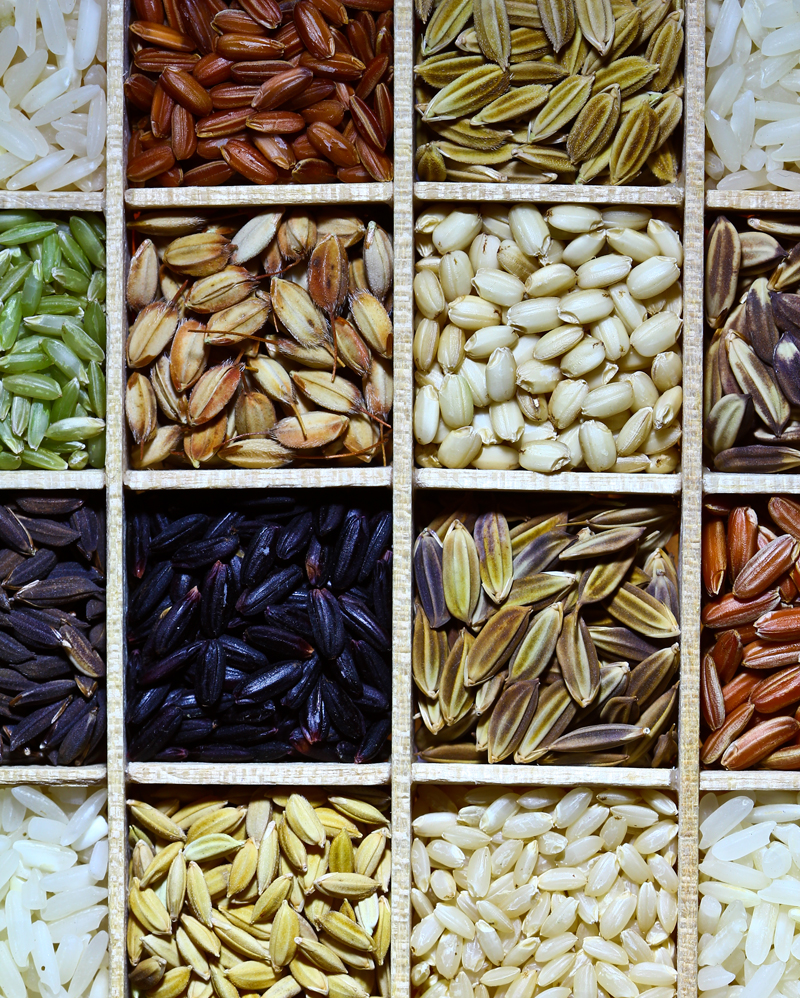
Rice seed collection from International Rice Research Institute. Wikipedia. A diet that emphasizes whole grains with no added fat may result in more weight loss and lower cholesterol than a Mediterranean diet.

Study: Plant-Based, No-Added-Fat Or American Heart Association (AHA) Diets: Impact On Cardiovascular Risk In Obese Children with Hypercholesterolemia And Their Parents, The Journal of Pediatrics, 11 February 2015

Press Release: Plant-Based Diet May Reduce Obese Children’s Risk Of Heart Disease, Cleveland Clinic, 12 February 2015

This was a 4-week, randomized trial of 30 overweight children with high cholesterol (greater than 169 mg/dl).

The two diets:

  • Plant-based (PB) diet: Plants and whole grains, with limited avocado and nuts, no added fat, and no animal products.
  • AHA diet: Fruits, vegetables, whole grains and non-whole grains, limited sodium, low-fat dairy, selected plant oils, and lean meat and fish in moderation.

PB diet: improvements in 9 measures, statistically significant from baseline:

  • BMI
  • Systolic blood pressure
  • Weight (6.7 lbs)
  • Mid-arm circumference
  • Total cholesterol (-22.5)
  • LDL cholesterol (-13.1)
  • Insulin
  • Myeloperoxidase
  • High-sensitivity C-reactive protein

AHA diet: improvements in 4 measures, statistically significant from baseline:

  • Weight (2.5 lbs)
  • Waist circumference
  • Mid-arm circumference
  • Myeloperoxidase

Children on the AHA diet were to consume less than 30% of their calories from fat, less than 7% from saturated fat, less than 1500 mg sodium, and less than 300 mg cholesterol. Children on the PB diet were getting much less fat; about 18% of their calories came from fat, less than 4% from saturated fat.

The AHA diet with its emphasis on fruits, vegetables, whole grains, fish, low-fat meats and dairy, and olive oil essentially defines the Mediterranean diet that physicians recommend to their heart patients. As you can see, it isn’t their best choice. Lowering the fat and animal foods further resulted in more weight loss and lower cholesterol in both the children in this study and their parents who followed the diet along with them.